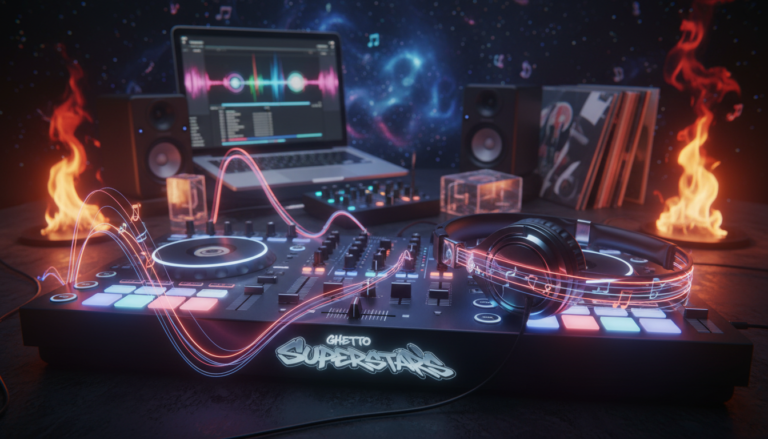

Ready to flip the script on sleepy sessions and actually get crowd-ready faster? We ask that because most beginners waste time chasing gear instead of building habits that stick.
We run Ghetto Superstars as a creative hub for djs, artists, planners, and music lovers. Our mission is simple: a repeatable system that builds real skills session by session. Make sure you follow focused blocks, set clear goals, and record real sets to reveal weak spots.
You can level up with Free AI Music Tools for names, event ideas, and setlists, plus fresh mixes and video mixtapes for inspiration. When you’re ready, get pro event support—sound/PA, lighting, hosting—or shop gear and connect with Ghetto Foundation community impact. Bookings: +256 700 000000 / hello@ghettosuperstars.ug.
Want a quick starter course and structured ways to spend your next 30–60 minutes on the decks? Check this practical primer for beginners with actionable steps: new to djing.
Key Takeaways
- Short, focused sessions beat long, aimless hours.
- Work one skill per session and log progress.
- Record sets—the red button shows what needs fixing.
- Train ears, simulate real rooms, and practice transitions.
- Use community tools and free AI to spark ideas and grow.
Build a practice routine you’ll actually stick to
Turn sessions into scheduled shifts so progress becomes a habit, not a mood.
We treat this like a job. Block the same time on your calendar each week and defend it. Small, regular shifts beat rare marathons.
Block time like a “shift” to stay consistent
Protect the block. Same days, same hours. This removes decision fatigue and makes consistency automatic.
Use low-energy days for music prep and organization
Map high-energy work to mixing drills and low-energy work to crate cleanup. On slow days, set cue points, tag tracks, and sort playlists.
Set up your space so it’s easy to start fast
Leave your controller or decks ready, headphones plugged, and your software running. Cables tidy. Power and routing checked.
- Start in 60 seconds: gear out, audio routing set, volume at monitor level.
- Friction-killer checklist: power, routing, monitoring, and a dedicated practice crate.
- Momentum over intensity: 30 focused minutes, multiple times per week.
| Session Type | When | What to do | Goal |
|---|---|---|---|
| High-energy | Evenings, weekends | Mixing drills, transitions | Build skill speed |
| Low-energy | Mornings, commutes | Crate org, cue points, tagging | Catalog and prep |
| Quick-start | Any spare 30 min | Short runs, track familiarization | Keep momentum |
We call out the hidden trap: too many setup things becomes an excuse. Design the room to pull you toward the decks. That’s how routines survive real life.
Set clear goals and track your progress over time
Start each session by naming one clear, achievable goal — then chase that goal until it feels easy.
Choose one skill per session to avoid plateauing
We help you pick ONE skill per session so you don’t spread focus thin. Beatmatching, phrasing, EQ swaps, or tempo recovery — take one point and work it until it sticks.
Short drills win. If you have 20 minutes, drill one transition. If you have 60, run a mini set and review. This ties goals to time and builds real momentum.
Keep a simple practice log: what worked, what didn’t, what to repeat
Use Notes or a small notebook. Write the goal, what happened, one fix, and the next repeat point. These tiny entries show patterns in your mistakes and help you level up.
- Micro-record: hit record for 10 minutes to catch timing issues fast.
- Track the wins: clean blends for 8 bars becomes 32 bars over weeks.
- Make sure your goals match your foundation. Don’t chase advanced moves too soon.
“Small, focused work compounds. One clean skill today = confidence for the whole set tomorrow.”
We celebrate steady progress. Use these simple ways to turn blind mixing into visible growth and real performance gains.
Learn your tracks so mixing decisions feel automatic
Learn every part of a track so your mixing choices become instinct, not a guess.
We treat listening like production work. Count phrases. Mark intros, breaks, and drops. Find the safe zones where transitions land clean.
Active listening: intros, breakdowns, drops, and phrasing cues
Active listening trains your ear. Spot vocal entries and phrase ends. These points tell you when to move.
Create mini “two songs” blocks that blend well, then reshuffle
Build 2–5 track blocks, starting with two songs that match. Practice those pairs, then reshuffle. Flexibility beats a locked playlist.
Balance new tracks with familiar tracks to level up faster
Alternate a known track with a new one. One anchor gives you room to experiment and makes selection faster.
- Set a few meaningful cue points: intro, mix-in, vocal, breakdown.
- Make track knowledge a habit so transitions become automatic.
- Knowing your music frees you to read the room and react.
| Action | Why | Goal |
|---|---|---|
| Mark phrases | Shows safe mix points | Cleaner transitions |
| Two-song blocks | Builds flexible order | Faster selection |
| Mix new with known | Reduces risk | Confident mixing |
“When you know the music, your next move is obvious.”
DJ practice tips for tighter transitions and cleaner mixes
Tight mixes come from focused drills, not flashy moves. Pick one transition technique and repeat it until your hands and ears match. Treat it like scales: long blend, bass swap, echo out, or quick cut. Repeat. Repeat.

Drill one transition until it’s second nature
Isolate a single move and run it in short bursts. Record the result. Fix one small error each run.
EQ and volume control to avoid muddy sound
Manage bass overlap and tame harsh mids. Set gains so perceived loudness stays steady. Use subtraction EQ more than boosts to keep the sound clean.
Phrasing that keeps mixes “in the pocket”
Mix on bar boundaries. Count 8s and 16s. When energy lands on the beat, the set feels professional — not forced.
Tempo control: BPM matching and recovery
Match BPM by ear, then use micro-nudges to recover timing. If a track slips, check phase, nudge, and reset calmly. This is what keeps a live performance intact.
- Decks-first workflow: cue in headphones, set gains, check phase, then commit.
- Practice under pressure — simulate a gig so clean work survives stress.
- Foundations first. Style comes after the basics are solid.
“Clean under stress is what gets you booked and remembered.”
When you need pro event support or gear, book services that match your goals. Make sure your core is solid and the rest becomes expression.
Train your ears, not your eyes
Let your ears lead the set; sight can lie when the room moves.
We push you to ditch the waveform habit and trust sound. Switch your software to library view, minimize waveforms, or cover the laptop so your ears do the driving.
Loop drills and screen-free work
Run two 8-beat loops with a tiny bpm difference. Feel the phase drift. Nudge by ear until they lock without looking.
Work under useful pressure
Set a timer and force quick corrections. This trains calm decisions when things slip under pressure.
- Listen for kick flam, hi-hat swing, and the “pull” at phrasing points.
- Use cue points to start fast, but let ears confirm alignment.
- Record short drills so you can hear real progress over weeks.
“When your ears lead, you look up and connect with the crowd — that’s where real mixing happens.”
| Drill | Goal | When |
|---|---|---|
| 8-beat loop drift | Beatmatching by ear | 10–15 min |
| Screen-covered sets | Room awareness | 15–30 min |
| Timed correction rounds | Calm recovery under pressure | 5 min intervals |
Want a structured way to layer these into your sessions? Check our focused session guide for a clear sequence that builds these skills step by step. Make sure you train this way and the rest becomes natural.
Plan a set that takes people on a journey
Treat a set like a train: clear stops, rising hills, and a finish that lands right. We design a simple map so the room moves with you. A thoughtful plan keeps the crowd engaged from first bar to last.
Start, middle, end: mapping energy so the crowd stays with you
Begin gentle. Warm the room without rushing. Build the middle with intent and lift the energy toward a peak.
End smart. Let people feel the close, not like the train missed its stop.
Build multiple options per track to stay flexible in the moment
For every track, prep three follow-ups. One safe, one bold, one mood-check. This three-choice mindset keeps you responsive, not reactive.
Use key and energy awareness to prevent uncomfortable blends
Check key and BPM before committing. Harmonic clashes can clear the dancefloor faster than bad timing.
Track selection strategy for different rooms and audiences in the US
Crates by vibe, not just genre. College bars need peaks and singalongs. Lounges want groove and space. Weddings need recognizable hooks. Read the audience, then lead.
“Serve the room. Selection is leadership.”
Practice opening and closing like it’s a real gig
Start your slot with a simple, reliable three-track sequence that buys you calm when everything else is loud.
Design an opening gambit you can execute even when distracted
We build a short gambit: two or three tracks you can mix clean no matter what. This acts as an anchor when requests fly or cables are messy.
Rehearse the first ten minutes until it is automatic. Run it under pressure so your hands and ears move without thinking.
Close with intention: peak before time and avoid running out of steam
Plan your finish. Start the closing section at least 20 minutes before the end of your slot.
Aim to peak about a minute before your time ends. Leave the room wanting more, not wondering why it stopped.
- Design an opening gambit that survives gear swaps and loud handoffs.
- Rehearse the first 10 minutes under stress so it stays calm on the night.
- Start closing ~20 minutes out; peak ~1 minute before the end.
- Choose energy based on the kind of set — warm-up, prime-time, or after-hours.
“The crowd remembers how you start and how you finish — train those moments like headlines.”
We make sure your performance holds under pressure. The audience will remember the beginning and the end long after the middle fades.
Record your practice sets to level up faster
Capture every session so you can audit timing, phrasing, and energy like a coach. Hit the red record button and treat the file as feedback, not judgment.
Why the red light changes what you do
The moment you press record the room shifts. Simple moves feel harder. That pressure is valuable. It simulates a gig and builds calm under stress.
How to review with purpose
Listen for: transitions, timing drift, phrasing alignment, EQ clashes, and overall energy flow.
- Mark exact timestamp points when something slips.
- Name the cause: too much bass overlap, late phrase, or wrong track energy.
- Write one clear fix you will run next session.
Turn mistakes into repeatable wins
Convert each mistake into a single drill. Run that drill until the error disappears. This is the way to level up fast.
“The red light exposes truth. Keep receipts—compare recordings month to month and watch growth.”
Bonus: Saved sessions become shareable mixes when you’re ready. Make sure you keep them.
Add creativity without losing control
Use live edits to make familiar songs feel fresh, but keep control first.
Familiarity wins. Live mashups and acapellas lift reactions because people connect fast to known hooks.
We unlock creativity with purpose. One smart live mix can spark the floor without playing the obvious version.
Hot cues and FX: seasoning, not the main course
FX and hot cues are powerful. But LESS IS MORE until your foundations are solid.
Use one creative move per transition, then return to clean sound. Messy tricks hurt the overall mix.
Prepare cue points and fallback routines
Set cue points for vocal drops, clean intros, and quick exits. These points keep creativity tight under pressure.
Build a few fallback routines — reliable combos to save a set when a plan flatlines.
- We make sure creativity serves the room, not ego.
- Experiment in drills so techniques become reliable in performance.
- Think of live mixes as accents that lift energy, then step back.
“Creativity with control keeps people dancing — that’s the way we lead.”
Use tools, mixes, and community to keep improving
Grow faster when you pair the right tools with real mixes and a crew that pushes you forward.
Practice alone helps, but structured resources speed progress. Use software that surfaces track key and energy so your track selection avoids clashes. Study strong mixes like a mini course: listen for intro choices, mid-set moves, and the closing run.
Free AI tools for names, set ideas, and setlists
Use our Free AI Music Tools to generate names, event concepts, and quick setlists. These tools free time so you can focus on mixing and learning.
Study mixes and video mixtapes
Stream and download fresh mixes to sharpen selection and flow. Reverse-engineer transitions and energy pacing from pro sets to build your own course of improvement: listen, note, repeat.
Play out with full support
When you’re ready to perform, we offer services across Uganda—sound, PA, lighting, and hosting. Browse gear in our shop and support the Ghetto Foundation. Contact: +256 741 669 338 | services@ghettosuperstars.co. Music connects us — and everything you need starts here.
| Resource | Purpose | Result |
|---|---|---|
| Free AI Tools | Generate names & setlists | Save time, clearer planning |
| Recorded mixes | Study transitions & pacing | Better selection & flow |
| Pro services | Sound, lighting, hosting | Smooth live execution |
| Shop & Foundation | Gear & community impact | Support growth and causes |
“We keep you moving forward with tools that speed your workflow and the crew that lifts your sets.”
Conclusion
Tie everything together: time blocks, focused drills, and real sets make progress obvious.
Protect your time, learn your tracks deeply, and drill mixing fundamentals until they feel automatic. Record often, review honestly, and turn each mistake into one clear fix for the next session.
Guide people through energy with intention — open strong, adapt live, close with purpose. Keep it human: clean sound and confident choices build trust with your audience.
Keep building with us at Ghetto Superstars — the creative hub for djs, artists, planners, and music lovers. Free AI tools: Free AI Music Tools. Fresh mixes: Latest mixes & mixtapes. Real support: Services in Uganda. Shop & Foundation links live on our site.
Contact: 📞 +256 741 669 338 | 📧 services@ghettosuperstars.co — Music connects us — and everything you need starts here.