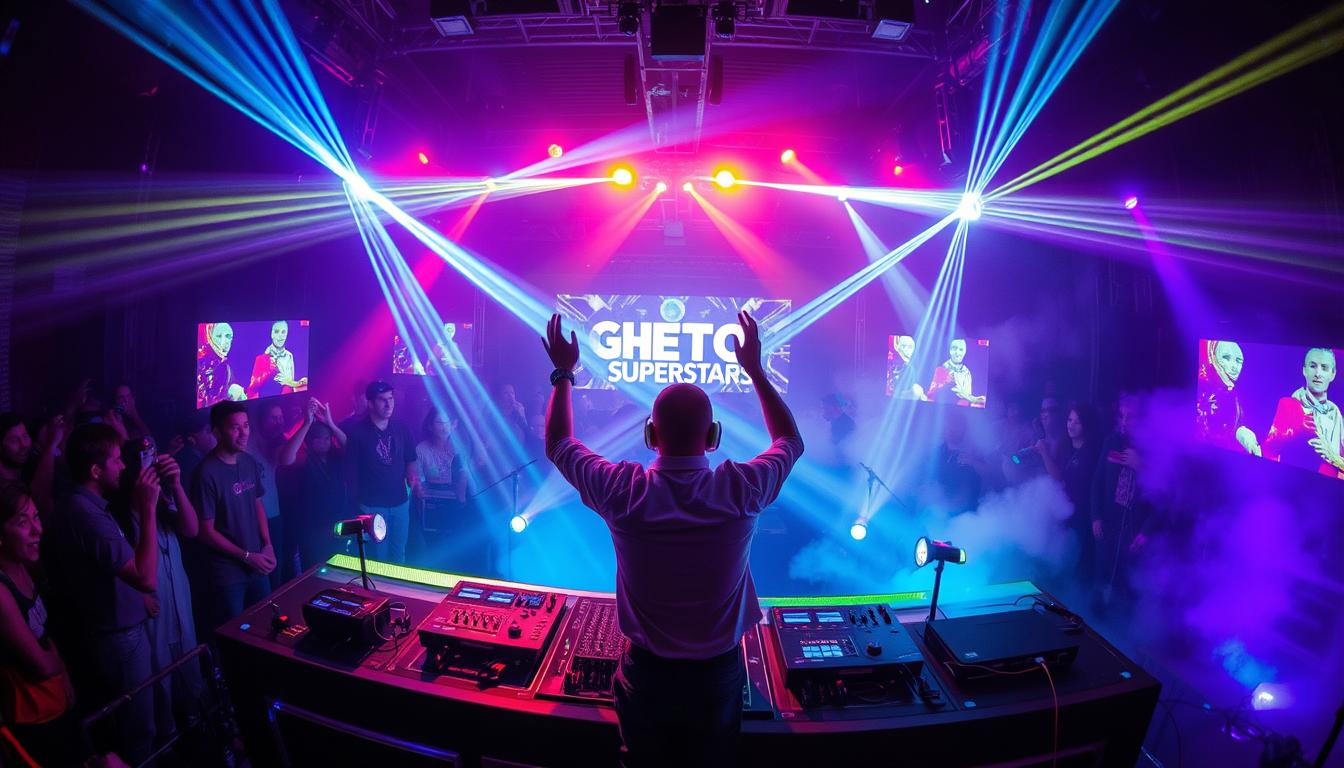
Surprising fact: venues that pair strong sound with smart visual design see crowd engagement rise by over 40% within the first set.
We believe a show should hit more than one sense. Great lighting finishes the story and makes your mix unforgettable.
Think PAR cans, moving heads, lasers, fog and compact controllers. Building a rig is easier now. Gear choices fit budgets and venue size.
Ghetto Superstars is more than event services. We are a creative hub for artists, planners, and music lovers. Free AI music tools, mixtapes, and pro event support live here.
In this guide we’ll map categories, real price ranges, and what shipping size means for mobile work. You’ll get practical wins: what to buy first, what can wait, and how to plan a cohesive look before checkout.
Key Takeaways
- Visuals amplify sound; lighting creates MEMORABLE rooms.
- Compare wash, PAR uplights, moving heads, lasers, and practical effects fast.
- Know price ranges and when to buy new versus used.
- Factor shipping weight for mobile setups.
- Plan your look first to avoid buying twice.
What Great Lighting Adds to a DJ Set in Today’s Venues
When sight syncs with sound, the crowd doesn’t just listen — they belong.
We design visual stories that translate bass drops into visible impact. Drops feel bigger. Builds breathe longer. Transitions become obvious when movement and intensity match the music.
Match mood by choosing a color palette and motion style. Warm tones and slow fades suit intimate sets. Cool gels and snappy hits fit high-energy floors. Clean coverage often beats chaotic flash for readability.
“One strong base layer + one motion layer + one atmosphere layer is usually enough to look pro.”
Think about the audience in modern venues. People film moments. So we craft looks that read well on camera without blinding the room.
Plan the look before you buy
- Pick a signature vibe first — club, wedding clean, or festival energy.
- Prioritize foundation gear to control price and avoid returns.
- Factor shipping costs and package size for mobile work.
Bottom line: smart planning saves money and time. A clear look keeps every fixture working toward the same story.
How to Choose DJ lights and effects for Your Budget, Venue, and Setup
A smart system begins with honest questions about space, circuits, and load-ins. Start by measuring throw distance. A small dance floor needs wide beams. A deep stage needs narrow angles that reach the back wall.
Power, heat, and LED efficiency
LED fixtures cut power draw and heat. That matters in rooms with tight circuits. Choose units with efficient drivers and quiet fans for longer sets and fewer complaints.
Portability for bars, weddings, and private events
Travel-friendly rigs win gigs. Pick compact cases, quick clamps, and lightweight stands. These save load-in time at a bar or private events and reduce strain on your crew.
Price, shipping, and long-term value
Price tags hide shipping costs—truss and movers add weight fast. Consider local pickup or bundles to cut shipping. For open-box or used gear, inspect LED life, clamps, and yokes before you pay.
- Buy order: wash/PAR coverage first, moving heads second, atmosphere third.
- Think long-term: spend more for better optics, quieter fans, and consistent DMX.
LED Wash Lights and Color Changers for Clean, Crowd-Pleasing Coverage
A wide, even wash is the quickest way to make a room feel intentional and alive.
We use wash fixtures to set mood fast. A uniform field of color makes the booth, back wall, and crowd read like a scene. That foundation comes before any moving beams or strobes.
Why these fixtures form the base
Wash fixtures paint broad areas so faces and walls look natural. They cover hot spots that narrow beams miss.
Which LED engines matter: RGB vs. RGBW vs. RGBA/UV
RGB is budget-friendly for basic mixes. RGBW adds clean whites for true skin tones. RGBA/UV options deepen mixes and make fabrics pop under blacklight.
Best use cases and placement tips for small venues
- Two wash units transform a bar or small hall.
- Four units give club depth and symmetry.
- Cross-light the dance floor; add backlight behind the booth to separate performer from background.
“One strong base layer + one motion layer + one atmosphere layer is usually enough to look pro.”
| Feature | Why it matters | Spec to check |
|---|---|---|
| Dimming smoothness | Smoother fades look pro and film well | 16-bit or PWM-free drivers |
| Flicker-free | Video-friendly, avoids strobe artifacts on camera | High refresh rate / camera-safe mode |
| Beam angle | Controls coverage vs. intensity | Wide (40–90°) for wash; narrow for punch |
For more on fundamental gear, see what is a wash light.
PAR Cans and Flat PARs for Uplighting, Booth Lighting, and Stage Color
PAR fixtures give your room instant color, clean lines, and budget-friendly impact.
Role in the rig: PARs handle clean uplighting, booth glow, and consistent stage color that makes photos look premium. They form the base layer before moving heads or strobes enter the mix.
Classic vs. modern: Traditional PAR cans use lamps and gels. They are simple and familiar. Modern LED PAR fixtures save power, run cooler, and swap colors without gels. Compare brightness-per-watt, heat, and control options when you buy.

Quick-win picks and packs
- Starter examples: American DJ Mega Flat Pak Plus or Chauvet SlimPAR 56 LED PAR Can — compact and reliable.
- SlimPAR-style fixtures ship smaller, set up faster, and fit tight rigs.
- Integrated packs are common entry points; they reduce the learning curve and lower initial price.
Placement tips
Floor uplighting makes walls and drapes come alive. Truss mounting gives a clean stage wash. Stand mounting behind the booth creates symmetry and separation.
“PAR packs are the best first upgrade — big visual gain for modest spend.”
Accessories mini-checklist
- Clamps and safety cables
- Power linking gear and correct adapters
- Padded bags for weekly load-ins
Bottom line: PAR packs balance impact with low shipping footprint. Start with a few quality fixtures and the right stands to make every set look pro.
Moving Head Lighting That Brings Motion, Beams, and “Headliner” Moments
When beams move, the crowd reads cues even before the drop hits.
moving head fixtures fall into three families: spot for crisp gobos, wash for soft color with motion, and beam for tight aerial shafts that cut through haze.
Which specs actually matter
Look for wide pan/tilt ranges so a single unit covers the room. Zoom swaps wide washes for tight beams fast. Bright optics and good lenses make the beam read on camera and live.
Gobos, prisms, and placement
Gobos deliver shapes. Prisms multiply patterns. Movement sells the moment. Mount on truss behind the booth for stage presence, on totems for 360 views, or angle toward the floor to pull the crowd in.
Intelligent lighting basics
Start with auto programs or sound-active modes for quick wins. Then build scenes and chases when you want a signature look. Remember: movers raise the price and shipping of your system, so buy fewer, better units that last.
“One strong mover placed right beats ten weak ones scattered around.”
Lasers and Strobes for High-Impact Drops and Peak-Time Energy
Small, precise bursts of visual power change how a room feels when the beat drops.
We treat lasers and strobes as spice — peak-time accents that lift the crowd without stealing the show.
Laser patterns, beams, and room-filling movement
Lasers make sharp beams and moving patterns that cut through haze. Use units like the American DJ Galaxian Sky DMX Laser Effect for sweeping, musical looks.
With haze, beams become three-dimensional. That moving depth reads great live and on camera.
Strobe use and safety
Strobes hit hard. Keep bursts short. Watch for people with light sensitivity. Never run constant flash — use strobes for punctuation, not punishment.
DMX-capable options for tighter show control
DMX control lets you time pattern swaps, intensity changes, and synchronized blackouts. Compact strobes like the Gem Sound LED Battery OPP DJ Mini Strobe pair well with dmx control for mobile rigs.
- Shop smart: check safety certifications and scan angle coverage before you buy.
- Consider mounting options and case needs — small units still add to price and shipping totals.
- Buy DMX-capable models when you want precise, moving cues that match your set.
“One sharp accent at the right moment makes a memory.”
Fog, Haze, and Bubble Machines That Make Lighting Effects Pop
Atmosphere machines turn simple beams into textured, three-dimensional scenes.
Fog hits hard for peaks. It makes lasers and moving beams feel alive. Haze hangs longer and flatters wash and beam work in slow rooms.
Choose by room: ventilation, ceiling height, and alarm sensitivity matter. For a tight bar or small venue use a haze unit. For big drops, pick a VF1300-style fogger for punch.
Pro picks and practical notes
- Chauvet Hurricane Haze 3D — steady atmosphere for beams.
- American DJ VF1300 — fast, loud fog for peak moments.
- Chauvet B-250 bubble machine — family-friendly sets and daytime events.
- Chauvet Geyser RGB — an all-in-one RGB fog burst for the DROP button.
Plan consumables. Count gallons of fog juice and bottles of bubble solution before the gig. Store fluids cool. Running out mid-set kills momentum.
“Atmosphere makes wash, beam, and laser looks read bigger without buying more fixtures.”
Bottom line: the right machine multiplies your gear. Consider price and shipping when adding atmosphere to your rig.
Lighting Controllers, DMX Control, and Wireless Options for Tight Synchronization
Tight show timing starts where your console meets the rig.
We demystify dmx in DJ-first terms so you can focus on moments, not menus.
DMX basics: channels, scenes, and chases
Channels are what a fixture can do. Scenes are your LOOKS. Chases are movement over time.
Think in blocks: assign channels, save scenes, then trigger chases to match a beat.
Hardware controllers vs. software interfaces
Hands-on controllers like the Wolfmix Mk2 win when you need speed. Software tools such as SoundSwitch Control One or myDMX 5 USB-C give deeper programming and show-level precision.
Pick the workflow that matches your pace. Upgrade with purpose—switching later costs more than one smart buy.
Wireless DMX and clean cabling
Wireless gives cleaner cable runs, faster load-ins, fewer trip hazards. Use Chauvet D-Fi XLR RX receivers and keep line-of-sight clear. Obstacles, distance, and RF noise can interfere.
Optical splitters like the Chauvet Data Stream 4 add reliability on larger rigs.
USB plug-and-play ecosystems
USB-enabled systems speed setup between venues. Brands offer linked ecosystems that cut setup time and lower shipping weight for mobile work.
“Control that feels like a partner lets the music breathe.”
| Tool | Best for | Why it matters |
|---|---|---|
| Standalone controller | Fast club sets | Instant access, low latency |
| Software + interface | Programmed shows | Deep scenes, precise cues |
| Wireless DMX kit | Mobile rigs | Cleaner cabling, quicker load-ins |
| Optical splitter | Large setups | Stable signal distribution |
All-in-One Lighting Effects Packages for Fast Setup and Consistent Results
Packages bundle everything you need to hit the floor running—no guesswork, just a polished look.
Gig bar-style packs combine wash panels with compact effects in a single bar. You get broad coverage plus moving pixels or strobes built into one rail. That cuts stands, trims cables, and speeds load-ins for bar and mobile work.
Integrated linking made simple
ILS-style systems simplify programming and syncing. They use linked presets so scenes trigger together. Less troubleshooting. Faster set changes. Perfect when you need consistent nights with minimal hands-on time.
Who wins with a package
Beginners get instant results tonight. Mobile pros save setup time between gigs. Small venues get repeatable looks across events. All three benefit from predictable price and a smaller shipping footprint.
“Start with a solid pack. Expand later when you need signature moves.”
| Package type | Best for | Key buy lens |
|---|---|---|
| Gig bar-style | Bars, mobile sets | Fewer stands, longer bars raise shipping size |
| Integrated ILS kit | Venues, repeatable nights | Easy linking, lower setup time |
| Expandable bundle | Growing pros | Check included clamps, bags, foot controller |
Smart buyer tip: compare total price to included hardware and shipping size. Bars can be long and costly to deliver, so factor freight before you buy.
Want deeper gear choices or to weigh hardware vs software options? See our hardware vs software guide for next-step planning.
Essential Accessories: Stands, Truss, Cables, and Safety Gear
Accessories turn a packed van of gear into a dependable, repeatable stage setup. We make the case: small buys prevent big failures on show night.
Stands, truss, and stage basics
Height, base stability, and load ratings matter. Use stands rated for mount weight. Choose truss with known span specs so your stage stays safe.
Cabling, distribution, and signal safety
Plan power runs and label every run. Clean DMX routing reduces dropouts. Optical splitters like the Chauvet Data Stream 4 protect signals across many fixtures.
Mounting, transport, and special add-ons
Match clamps to your truss bolts. Safety cables are non-negotiable. Pack padded cases so lenses and yokes survive trunks and freight.
“Buy once, buy right—accessories are the difference between a cool idea and a reliable system.”
| Item | Typical price | Shipping impact |
|---|---|---|
| Aluminum truss | $200–$800 | High |
| Stands & clamps | $40–$200 | Medium |
| Optical splitter / cables | $120–$400 | Low |
Mirror ball add-ons and flexible rigging let one kit serve many nights. Keep an eye on price and shipping when you buy. Buy smart, keep the kit in rotation, and your shows will hold up gig after gig.
Ghetto Superstars Hub: Tools, Mixes, and Pro Event Support
Ghetto Superstars is a creative hub where tools, mixes, and live support meet to lift every show.
We build more than parties — we build culture, community, and opportunity powered by music. Use our free AI Music Tools to generate names, event ideas, and set inspiration in seconds.
Free AI Music Tools for names, ideas, and set inspiration
Jump into the generator for fresh ideas before you plan a night. It helps with artist names, set themes, and quick creative prompts.
Stream and download mixes and video mixtapes
Feed your next set with curated mixes from our crew. Stream or download video mixtapes to keep your library current and crowd-ready.
Book pro services across Uganda
We offer booking for sound & PA systems, lighting, event hosting, and full production. Tell us your venue, your vibe, and budget; we’ll handle the rest.
Shop gear or support the foundation
Browse DJ/audio gear in our shop or support community impact through the Ghetto Foundation. Your purchase helps build shows and opportunities.
“Music connects us — everything you need starts here.”
- Free AI tools: Generate ideas
- Stream/download: Fresh mixes & mixtapes
- Book pro support: Sound, lighting, events
Compare price, shipping, and reliability with confidence. We advise on gear choices that match your budget and the venue size so you avoid surprises at checkout.
| Service | What we cover | Why it helps |
|---|---|---|
| AI Tools | Names, themes, set prompts | Speeds creative prep |
| Mix library | Stream/download sets | Fresh tracks for your next set |
| Production booking | Audio, lighting, hosting | Reliable shows across Uganda |
| Shop & Foundation | Gear sales, community support | Buy gear that gives back |
Ready to plan a headline night? Call +256 741 669 338 or email services@ghettosuperstars.co. We help you pick gear, manage shipping, and deliver shows that feel like home.
Conclusion
Conclusion
We close with a clear formula you can act on: start with even lighting coverage, add one moving unit, then layer atmosphere for depth.
Plan before you buy. Compare price honestly, factor shipping, and pick gear that scales from a small bar to bigger nights.
Better light makes the audience feel the music, not just hear it. A tight lighting system lifts every clip, photo, and moment.
Next purchase checklist: correct light count for your room, a control method, safe mounts, key accessories, and consumables like fog juice.
Whether you choose Eliminator-style packs or RGBW fixtures, focus on results — not hype. If you want help planning a set, we’re here to guide you. Music connects us; the light is part of the message.