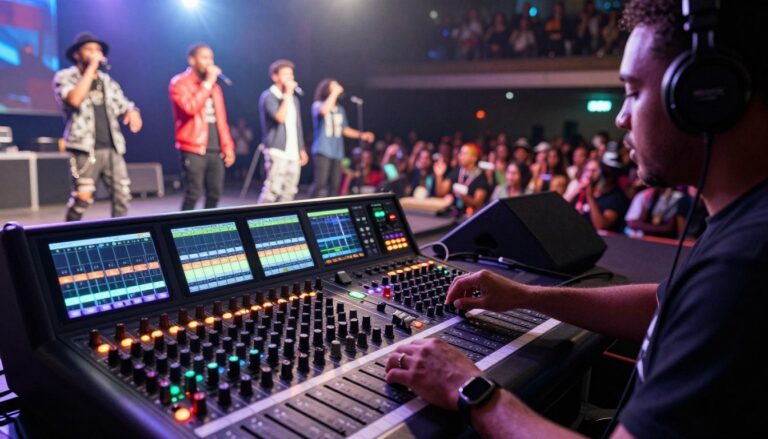
At Ghetto Superstars, we love bringing people together through music. To make events unforgettable, knowing how audio signals move is key. This journey is called signal flow.
Knowing about signal flow is important for getting the most out of your sound system. It helps with setting up the right levels and arrangement. As fans and event planners, understanding this concept is essential for great music moments.
We think sharing our knowledge can help people connect through music. By learning about signal flow, you can make your sound system work its best.
Key Takeaways
- Signal flow refers to the path of the audio signal from its source to its output.
- Understanding signal flow is vital for proper gain structure and staging.
- A well-optimized signal flow leads to better sound quality and performance.
- Grasping signal flow is key for music lovers and event organizers.
- Knowing signal flow helps in creating unforgettable music experiences.
Understanding Signal Flow Basics
Signal flow is key in live sound engineering. It shows how audio signals move from start to finish. Knowing the basics is essential to understand live sound systems.
Definition of Signal Flow
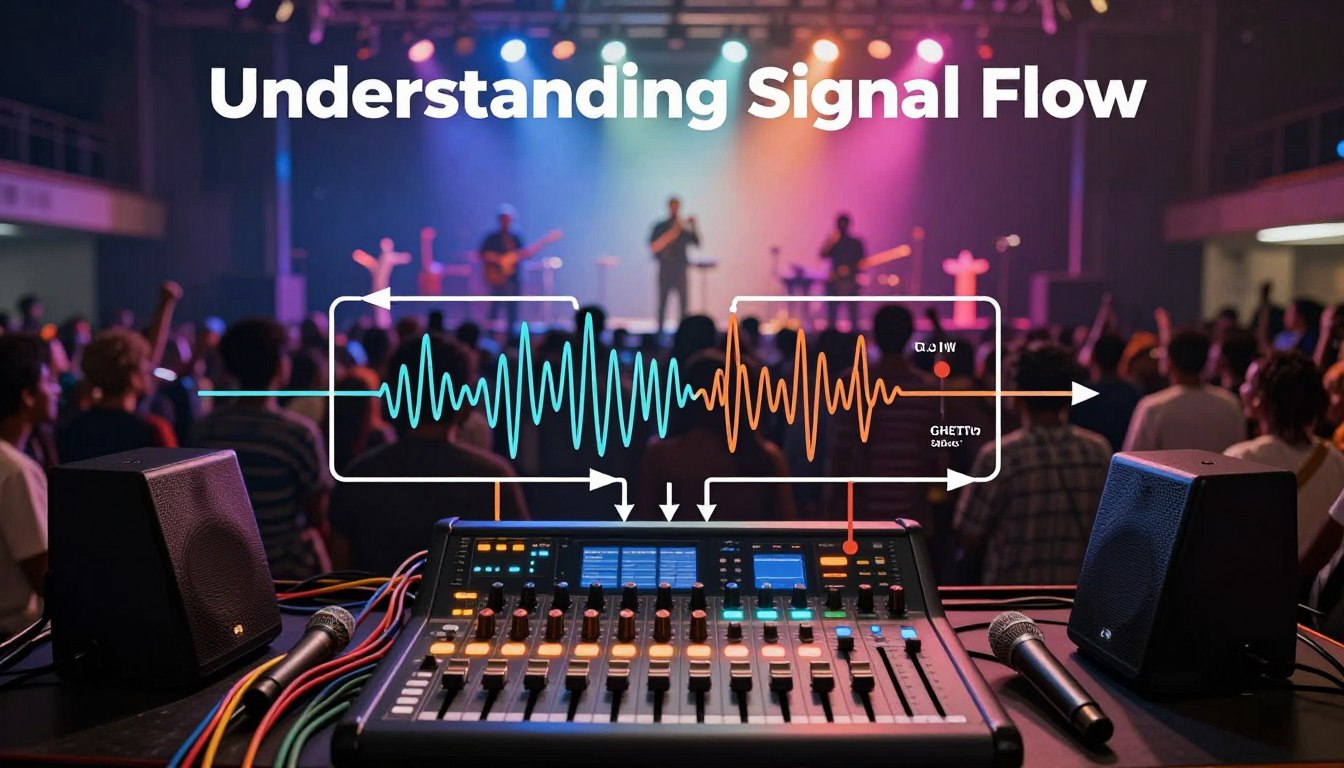
Signal flow is the path an audio signal takes. It starts at the source, like a microphone, and goes through processing gear to the output, like speakers. It’s more than just connecting things; it’s about how each piece changes the signal.
Key aspects of signal flow include the source, the processing, and the output. Each part is vital for great sound.
Importance in Live Sound
In live sound, knowing signal flow is crucial. It affects the audio quality. Good signal flow means clear, balanced sound without noise or distortion.
Understanding signal flow basics helps you fix problems, improve your system, and better the audience’s experience.
Components of Signal Flow
Signal flow has many parts, like microphones, instruments, and speakers. Each plays a big role in the sound we hear.
| Component | Function | Impact on Signal Flow |
|---|---|---|
| Microphones & Instruments | Capture or produce sound | Source of the audio signal |
| Mixers | Blend and adjust signals | Controls signal levels and routing |
| Amplifiers | Boost signal power | Prepares signal for loudspeakers |
| Loudspeakers | Output sound to the audience | Final stage of signal flow |
Knowing how these parts work together is essential. By improving each step, you can give your audience a better sound experience.
The Role of Audio Sources
In live sound, audio sources are key. They start the audio chain, affecting the sound quality. This quality is what the audience hears.
Microphones and Instruments
Microphones and instruments are the main sources. Microphones capture sound from vocals and instruments. They turn sound into an electrical signal for processing.
Instruments, whether acoustic or electric, go straight to the mixing console or through microphones. The quality of these sources greatly affects the signal flow.
For example, using the right microphones can improve sound quality. Dynamic microphones work well for loud sounds, while condenser microphones are better for detailed sounds.
Playback Devices
Playback devices like CD players and laptops are also important. They add pre-recorded music to live shows. It’s important to use high-quality devices and connect them correctly.
Gain staging is key when using playback devices. It makes sure the signal is strong but not distorted.
Signal Quality Considerations
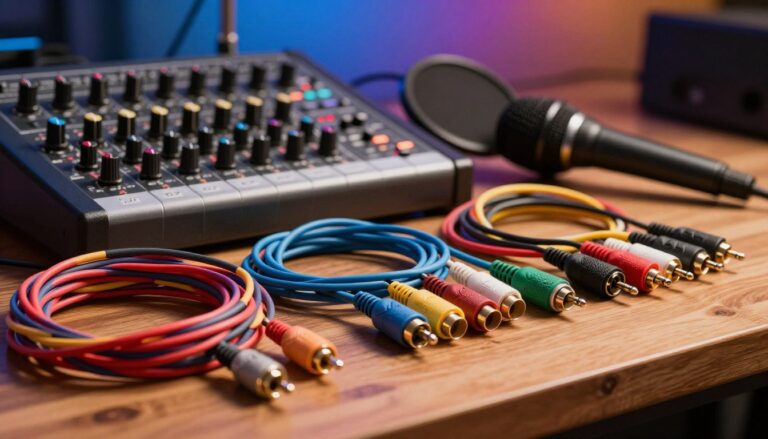
Keeping signal quality high is essential. Things like cable quality, gain staging, and the technical specifications of the audio sources matter. Balanced cables reduce noise, and proper gain staging optimizes sound.
By focusing on audio source quality and integration, you can greatly improve live sound. This not only enhances the audience’s experience but also shows the professionalism of the sound team.
Signal Flow Pathways
The journey of an audio signal from its source to the output devices is complex. It involves several key stages. Knowing these pathways is key to better sound quality in live events.
From Source to Mixer
The signal starts at the source, like a microphone, instrument, or playback device. It then goes to the mixer for processing and adjustments.

Mixer to Output Devices
Processed at the mixer, the signal goes to amplifiers and loudspeakers. These devices are vital for delivering sound to the audience.
| Stage | Description | Devices Involved |
|---|---|---|
| Source | Initial audio signal generation | Microphones, Instruments, Playback Devices |
| Mixer | Signal processing and adjustment | Mixing Consoles |
| Output | Signal delivery to the audience | Amplifiers, Loudspeakers |
The Journey Through Effects
Effects like reverb and delay can be added to improve sound quality. For tips on using effects, see our guide on building custom effects chains for DJing.
By understanding and optimizing signal flow pathways, you can greatly enhance live event sound quality.
Elements of a Sound System
To get great sound, knowing the key parts of a sound system is important. These parts work together to make your live events sound professional and fun.
Mixers: The Heart of Signal Flow
Mixers: The Heart of Signal Flow
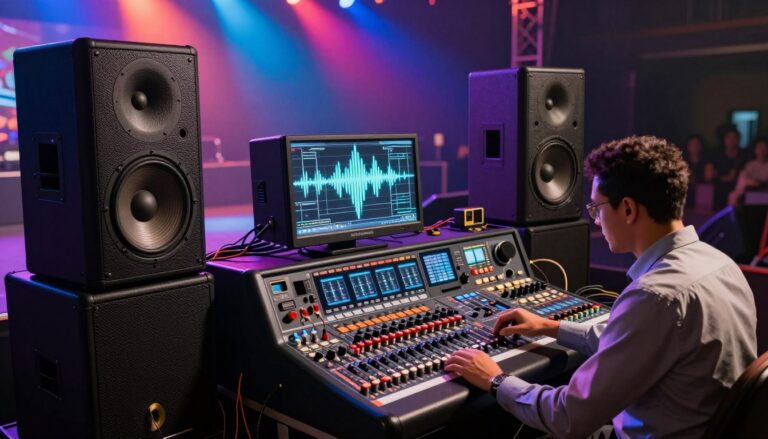
Mixers are at the center of any sound system. They control the digital signal flow and let you adjust the audio. You can balance levels, add effects, and make a great mix.
Learning how to use a mixer well can really improve your sound quality.
Amplifiers: Powering Your Sound
Amplifiers: Powering Your Sound
Amplifiers are key for making your loudspeakers loud enough. They boost the signal from your mixer so your speakers can play clear, strong sound. Picking the right amplifier is key for the best sound.
Loudspeakers: Delivering Sound
Loudspeakers: Delivering Sound
Loudspeakers are the last step in your sound system, bringing the sound to your audience. They come in many types for different uses. Choosing the right ones is important for clear sound at any event.
Knowing about mixers, amplifiers, and loudspeakers helps you build a great sound system. This knowledge lets you manage the digital signal flow well. Your live events will be unforgettable and impactful.
Types of Signal Flow
To get the best sound from your system, you need to know about different signal flows. These flows vary by the number of audio channels, how signals are sent, and the processing methods used.
Mono vs. Stereo Signal Flow
Mono signal flow uses one audio channel. Stereo uses two, creating a wider soundstage. Knowing the difference helps pick the right setup for your event.
- Mono is great for voiceovers and public announcements, needing just one channel.
- Stereo is best for music, giving a broader soundstage for a better audience experience.
Balanced vs. Unbalanced Signals
Balanced signals have three conductors for better noise rejection and quality sound. Unbalanced signals use two and are more likely to pick up noise.
Benefits of balanced signals include:
- Less noise
- Better sound quality
- Signals stay strong over long cable runs
Digital vs. Analog Signal Flow
Digital signal flow sends audio as digital data, making it flexible and less prone to degradation. Analog sends signals in their original form.
Digital signal flow is gaining popularity for its high-quality sound and ease of processing. Yet, analog is preferred for its warm, rich sound in some cases.
Understanding Signal Processing
Signal processing is key in live sound engineering. It helps engineers improve the audio quality. This process uses various techniques to change audio signals for better sound.
Equalization (EQ) Basics
Equalization is a vital technique in signal processing. It adjusts the audio signal’s frequency balance. By boosting or cutting certain frequencies, engineers can fix imbalances and enhance the sound.
For example, boosting high frequencies adds brightness. Cutting low frequencies reduces muddiness.
Compression and Its Role
Compression makes audio signals less dynamic. It lowers loud sounds and raises quiet ones. This is essential for controlling the mix’s overall level and adding punch to sounds.
Settings like threshold, ratio, attack, and release are key. They determine how much the sound is affected.
Effects Processors
Effects processors add ambiance and interest to audio. They include reverb, delay, and distortion. Reverb simulates space, while delay adds distance or rhythm.
Distortion adds grit and character. It’s often used in music to create a unique sound.
To learn more about signal flow, check out our guide on Understanding Signal Flow: A Beginner’s Guide to Audio. It covers the basics and their role in live sound engineering.
| Signal Processing Technique | Purpose | Common Applications |
|---|---|---|
| Equalization (EQ) | Adjusts frequency balance | Correcting imbalances, enhances clarity |
| Compression | Reduces dynamic range | Controlling mix levels, adding punch |
| Effects Processors | Adds ambiance and depth | Reverb, delay, distortion for various effects |
Troubleshooting Signal Flow Issues
Signal flow problems can really mess up live sound events. But, knowing how to fix them can save the day. It’s important to know the common issues and how to find them to ensure great sound.
Common Problems with Signal Flow
Many things can go wrong with signal flow, like bad microphones or broken instruments. Figuring out where the problem is is the first step to fixing it. Some common problems include:
- Distortion or feedback
- Signal loss or dropouts
- Incorrect gain staging
- Equipment malfunction
Knowing these issues can help you get ready and solve problems faster.
Diagnosing Signal Path Problems
To find signal path problems, you need a plan. First, look at your signal flow diagram to see how everything connects. Then, test each part of the signal chain. This might mean swapping cables, trying different microphones, or tweaking gain levels.
| Component | Potential Issues | Troubleshooting Steps |
|---|---|---|
| Microphones | Faulty or damaged | Test with a different microphone |
| Cables | Damaged or loose connections | Inspect and replace cables |
| Mixer/Console | Incorrect gain staging | Adjust gain levels |
By checking each part carefully, you can find and fix the problem.
Solutions to Improve Quality
After finding the problem, you need to fix it. This might mean adjusting your signal flow in music production settings, getting new gear, or making sure everything is plugged in right.
Regular checks and tests of your gear can also stop signal flow problems. Being proactive and ready can make your live sound event go smoothly.
Importance of Signal Flow in Live Events
Good signal flow makes a live performance stand out. It affects both the performers and the audience. It’s not just about sound moving from one place to another. It’s about quality, clarity, and precision.
How Signal Flow Affects Performance
Signal flow quality is key in live events. It ensures sound is clear and free from distortion. This is vital for both performers and the audience.
Key aspects of signal flow that impact performance include:
- Signal clarity and quality
- Effective use of effects processing
- Proper gain staging
Managing Signal Flow in Real-Time
Managing signal flow in real-time is tough. It needs a deep understanding of sound systems and quick adjustments. Sound engineers must watch the signal flow chart and tweak digital signals for the best performance.
Real-time management involves:
- Monitoring signal levels and quality
- Adjusting EQ and compression as needed
- Troubleshooting any issues that arise during the event
| Aspect | Description | Importance |
|---|---|---|
| Signal Clarity | Clear and distortion-free sound | High |
| Effects Processing | Use of effects to enhance sound | Medium |
| Gain Staging | Proper adjustment of gain levels | High |
Enhancing Audience Experience
The goal of managing signal flow is to improve the audience’s experience. High-quality sound tailored to the event creates an immersive experience. This engages the audience and leaves a lasting impression.
Understanding signal flow’s importance in live events shows the value of sound engineers. They create memorable experiences. Whether you’re organizing events or love sound, knowing about signal flow helps make better decisions for your events.
Developing Skills in Signal Flow
Learning about signal flow is key for top-notch sound at live events. As sound engineers, you know how vital signal flow is for a great audio experience. We’ll look at how to get better at signal flow through practice, useful resources, and working with experts.
Learning Through Hands-On Experience
The best way to learn signal flow is by doing it. Hands-on experience helps you see how signal flow works in real life. Start with small projects or help out at live events with experienced sound engineers.
- Get involved in local sound engineering projects for hands-on learning.
- Join online forums and groups to learn from others.
- Try out different signal routing setups to see how they affect sound.
Resources for Improving Skills
There are many resources to boost your signal flow skills. Online tutorials and workshops offer deep knowledge and hands-on training. Here are some top resources:
| Resource | Description |
|---|---|
| Signal Routing Tutorials on YouTube | Video tutorials that explain signal routing concepts and their application. |
| Sound Engineering Courses | Comprehensive courses that cover signal flow and other sound engineering topics. |
| Industry Conferences | Attend conferences to learn from industry experts and network with peers. |
Importance of Collaboration with Experts
Working with seasoned sound engineers can really help you understand signal flow. Networking with pros in the field offers valuable insights and growth chances. You can learn from their experiences, get new views, and improve your skills faster.
By combining practice, using resources, and working with experts, you can grasp signal flow well. Remember, mastering signal flow takes ongoing practice and a desire to learn from others.
Creative Applications of Signal Flow
Signal flow is more than just a technical term. It’s a creative space for sound engineers and musicians. We can use it to make unique sounds and improve our live shows.
Experimenting with Signal Routing
Playing with signal routing lets us find new ways to shape sound. We can get everything from simple tweaks to complex changes.
For example, using auxiliary sends and returns, we can make our sound richer. This is great for live shows, where we need to fit our sound to different places and people.
Utilizing AI Music Tools for Inspiration
AI music tools are changing how we design sound. They can spark new ideas and encourage us to try new things with signal flow.
AI effects processors can change audio in real-time. This opens up a lot of creative possibilities. By using these tools, we can explore new sounds in live performances.
Incorporating Effects Creatively
Adding effects to our signal flow can really improve our sound. From reverb and delay to distortion and EQ, there are many creative options.
Let’s look at a table that shows some common effects and how we can use them:
| Effect | Creative Application |
|---|---|
| Reverb | Adds ambiance and depth to vocals and instruments |
| Delay | Creates echo effects, adding complexity to soundscapes |
| Distortion | Introduces a gritty, edgy quality to sounds |
By knowing how to use these effects, we can make our live shows more exciting. This makes our performances more memorable for our audience.
“The art of signal flow is not just about technical proficiency; it’s about using that proficiency to create something beautiful and impactful.”
Expanding Beyond Signal Flow
Signal flow is key, but the music world’s heart is in its services and community. As we explore live sound, we see how DJ services and event support are essential for unforgettable moments.
The Role of DJ Services and Event Support
DJ services and event support are the core of any great event. They mix technical know-how with creative flair to wow crowds. Whether it’s weddings or corporate gatherings, these services make sure the music is felt, not just heard.
By hiring professional DJs and providing full event support, we craft an atmosphere that stays with people long after the event ends.
Building a Network of Music Professionals
Creating a network of music pros is vital for the industry’s growth. By linking talented DJs, sound engineers, and event organizers, we build a community that thrives on teamwork and new ideas. This network boosts service quality and opens doors for creatives to showcase their talents.
- Collaborate with others to keep up with trends.
- Share knowledge and resources to improve event quality.
- Support new talent to keep the industry lively and varied.
Community Involvement and Impact
Our mission centers on community involvement and impact. We believe music can bring people together and spark positive change. By working with local communities and backing charitable efforts, we aim to leave a lasting mark beyond our events.
Our community work includes:
- Teaming up with local groups to boost music education.
- Supporting events that use music for good.
- Urging our network to join community projects.
By looking beyond signal flow and focusing on the music industry’s wider aspects, we aim to build a more lively, welcoming, and impactful scene. It’s about using our talents and resources to make a difference, both on and off stage.
Connect with Ghetto Superstars
Now you know more about signal flow in live sound. It’s time to take your music to the next level. We invite you to connect with Ghetto Superstars and explore our innovative tools and services.
Free AI Music Tools
Discover our FREE AI music tools that can help you create unique soundscapes. Our tools are designed to inspire creativity. They make it easier to visualize your signal flow diagram.
Latest DJ Mixes and Mixtapes
Check out our latest DJ mixes and mixtapes. They are carefully curated to keep you up-to-date with the latest trends. Use these resources to improve your understanding of signal flow.
Professional Sound and Event Services
Ready to elevate your event? Book our professional sound and event services for a seamless and impactful experience. Our team is dedicated to delivering high-quality sound that brings your vision to life.
Join our community today and let’s unite through music!