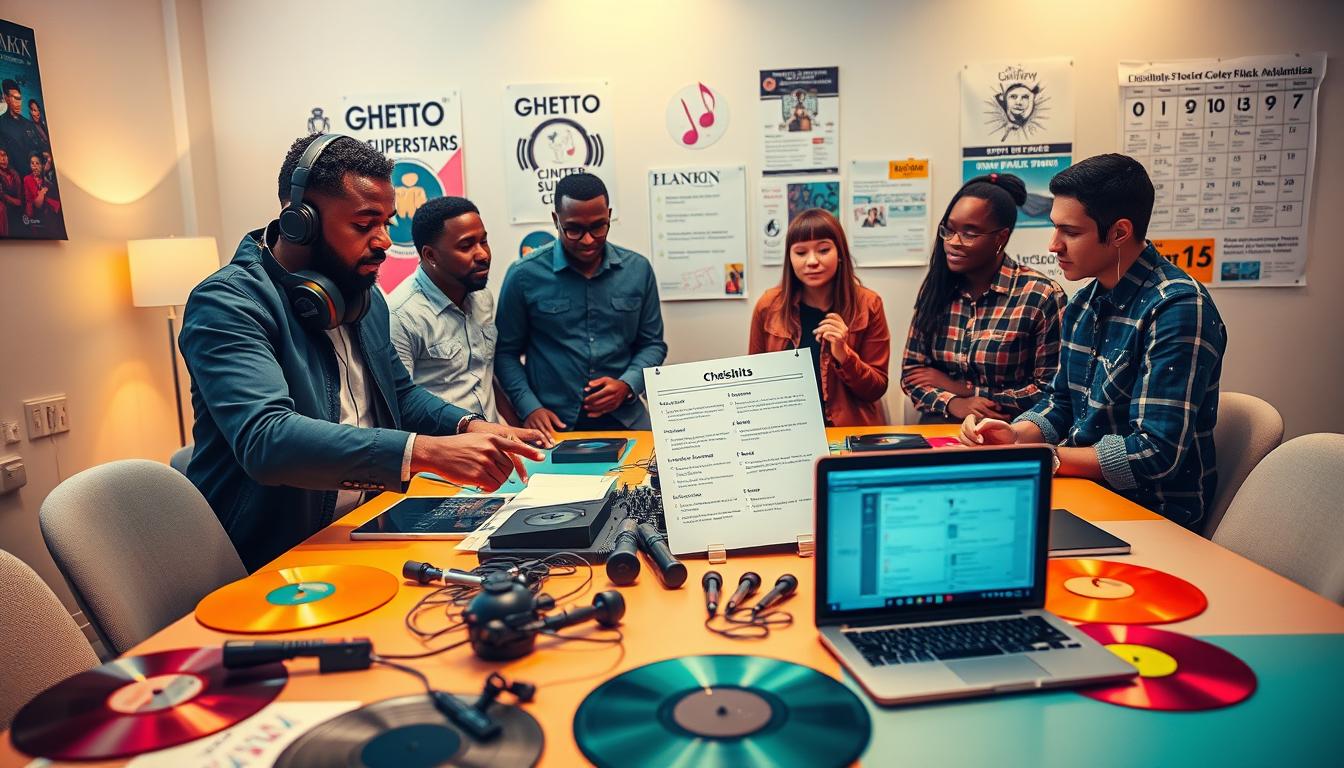
We throw parties like missions. We want a packed dancefloor, clean sound, and a night that feels like a MOVEMENT — not a scramble. Our roots started with one school-term party: we hired a hall, sold tickets, put friends on the door, and learned that running your own nights creates gigs and income.
Fundamentals never change. Channels and tools evolve, but trust, consistent promotion, and advance ticket sales do the heavy lifting. We frame these steps so you can run clubs, pop-ups, birthdays, corporate nights, or community parties while growing your brand and business.
Ghetto Superstars is more than services. We’re a creative hub for djs, artists, and music lovers. Use our Free AI Music Tools for names, ideas, and setlists. We also share fresh mixes and offer pro support — sound, lighting, hosting. Book or inquire: +256 741 669 338 or services@ghettosuperstars.co
Key Takeaways
- Plan for real people and realistic time constraints.
- Use DIY shows to manufacture slots and build leverage.
- Promote early and sell advance tickets for security.
- Have gear backups and a clear team timeline.
- Leverage our Free AI Music Tools to speed creative work.
Set clear goals for the event experience and your DJ business
We design nights with intent—every track, light cue, and pause has a reason. Start by naming the atmosphere you want. Define what people feel at warm-up, at lift, and at peak time.
Define the atmosphere from warm-up to peak
Decide the arc: warm-up, lift, peak, release. Map feelings for 9:30 vs 12:30 so your music choices follow the plan.
Choose success metrics that matter
Pick measurable goals tied to your business. Track attendance vs capacity, engagement on the floor, and repeat bookings.
“We set goals before we touch a flyer. That clarity turns shows into momentum.”
Practical point: lock milestones in a simple spreadsheet—venue booked, playlist final, promo launch. Aim for a “no-chaos” night: arrive early and confirm roles.
| Milestone | Metric | Deadline |
|---|---|---|
| Book venue | Contract signed | 6 weeks out |
| Finalize playlist | Set length & cues | 1 week out |
| Post-event review | Attendance, engagement, inquiries | 48 hours after |
Use our Free AI Music Tools to generate themes and setlist frameworks fast. For practical how-to guides see how to DJ at parties. This keeps the night purposeful and builds long-term success.
Know your audience so the music, timing, and vibe land
Knowing the people you serve shapes every track choice and every pause. We build an Audience Snapshot before doors open. That simple map helps us pick when to lift, when to slow, and which hooks to trust.
Map the crowd: age range, expectations, and what “a great night” means
We ask better questions than “what music do you like?”
When do people arrive? When do they dance? What makes them leave? Answers guide timing and set length.
Community matters. A student crowd moves different than professionals. A Friday behaves different than a Sunday.
Plan for variety across genres without losing the room
Variety is a promise, not chaos. Bridge styles with compatible BPM, keys, and a few recognizable hooks.
Build anchor tracks to define the vibe. Then weave new sounds around those anchors so the crowd trusts the story.
| Snapshot | Key Data | Set focus |
|---|---|---|
| Students (18–24) | Arrive late, cost-conscious | High-energy peak, singalongs |
| Young Professionals (25–35) | Early arrival, social groups | Warm-up groove, steady build |
| Mixed Crowd | Wide tastes, varied spending | Layered crates: warm, peak, recovery |
Our goal: serve the people in the room and make the dancefloor feel safe, electric, and alive.
Build a memorable event brand that can evolve beyond one genre
We build identities that grow with the music, not hold it back. A clear brand makes your night recognisable across feeds, posters, and ticket pages. People come for the whole experience. Not just a playlist.
Create a name, theme, and visual identity people recognise instantly
Pick a name you can grow into. Add a short tagline that sells the feeling. Choose a color palette and one signature element you repeat every time.
Keep your messaging consistent across posters, social media, and ticket pages
Same language. Same look. Same promise. Use Canva-style templates, a shared asset folder, and one brand sheet so collaborators don’t freestyle your identity.
- Brand beats genre: trends shift; identity endures.
- Design for a phone screen: clear type, bold contrast, fast read.
- Every piece of media must answer: what, where, when, and why.
Creator cheat code: use Ghetto Superstars Free AI Music Tools to generate DJ names, party concepts, and setlist directions that match your theme.
“Your brand is the signal that this is a place people belong.”
Choose the right venue and night for turnout and energy
Start by matching the size of the room to the people you expect—not the dream crowd. A packed 40–50 capacity creates instant social proof. It sounds better, looks better, and lifts the whole crowd energy.

Pick your night wisely. Fridays and Saturdays win. Strategic holiday weekends—like the Sunday before a holiday—can flip a slow night into a packed floor.
Estimate turnout honestly. Cut that number in half as a safety rule. Then choose a venue that fits the conservative estimate to protect your budget and your vibe.
Match the room to your sound and flow
Look at ceiling height, wall materials, and where speakers can be placed. If the bar blocks flow or the booth hides, the crowd won’t connect no matter how strong the set is.
- Load-in access, power, and booth space
- Bathroom capacity, ventilation, and where lines form
- Accessibility, nearby transit, parking, and noise curfews
Practical support: If you need pro sound, speakers, lighting, or hosting, Ghetto Superstars provides services across Uganda. Bring your vision—we’ll help with setup and amplification while you focus on the people and the night.
“A small, full room beats a big, empty one every time.”
Negotiate venue terms that protect your budget and reduce risk
Negotiate like a partner — you bring culture, crowd, and credibility. Walk into the conversation with value, not an apology. That mindset shifts the tone and wins fairer deals.
Get crystal-clear on what the venue provides vs. what you bring
Confirm the sound system model, booth size, and which pieces of equipment are included. Ask who supplies microphones, lighting, and monitors.
List the gear you will bring. Mark any gaps the venue must fill so there are no surprises on the day.
Watch for one-sided clauses and hidden costs
Beware minimum bar spend, unexpected staffing fees, and last-minute “equipment rental” charges. These things eat your margin fast.
Ask about security, engineers, and cleanup charges. If a fee feels vague, ask for exact numbers and when they apply.
Put the agreement in writing to avoid day-of misunderstandings
Time windows matter. Confirm load-in, soundcheck, curfew, and when you must clear the room.
Simple deal structure works best: clear hire fee, clear split (if any), and clear responsibilities. Email confirmations are the minimum. A short contract is stronger.
“Smart agreements protect your nights and your relationships.”
We can consult on contracts and support production if you need technical help or negotiating language. Make the deal fair. Make it sustainable. That’s the point of real growth for your business.
Plan your budget, pricing, and ticket strategy so everything runs smoothly
Cashflow is culture: selling advance tickets gives you breathing room. It turns guesses into numbers. That means better sound, safer staffing, and fewer surprises on the night.
Use advance tickets to stabilise cashflow and predict attendance
Early-bird pricing rewards commitment. Regular tickets capture the core crowd. Door prices nudge people to buy before they arrive.
- Advance sales = money now and clearer headcounts.
- Set clear deadlines for price tiers. Sell scarcity, not panic.
Build buffers for hidden costs and protect your margin
We use a simple budget template: fixed costs + variable costs + a backup fund. That buffer pays for extra cables, last-minute transport, or extra security.
- Fixed: venue, staffing, security.
- Variable: marketing, transport, printing.
- Hidden: gaffer tape, power strips, replacement equipment, extra hands.
Be realistic: assume a share of ticket buyers won’t show. Plan your break-even with that in mind. Budget discipline creates creative freedom over time.
“A small backup in the budget keeps the music and the people safe.”
If you want a practical template or help with production costs, read our production budget guide or contact Ghetto Superstars for support with sound, lighting, and hosting in Uganda. We’ll find an option that fits your budget and your vision.
Use DJ event planning tips to design a realistic timeline and run-of-show
A great night is a well-timed story; write it in reverse from when people arrive. Work backward from doors-open and set firm deadlines for promo, rehearsals, and tech checks. That one anchor keeps the whole night coherent.
Set real deadlines and protect the room’s energy
Start promotion 4–5 weeks out. Schedule the ticket launch, poster release, and reminder posts so they hit when people decide plans.
Arrive early for soundcheck. Confirm load-in times with the venue and the team. A calm setup means the night runs smoothly.
Coordinate set times and transitions
Think of sets like a relay. Define tempo ranges and who hands off to who. Each artist should bring 10–15 transition tracks for safe changeovers.
Assign who does what
Clear roles: door, host, problem-solver, and venue contact. Use one system for schedules and notes so everyone works from the same page.
“Plan it, then enjoy it.”
- Run-of-show: doors → warm-up → lift → peak → close → exit.
- Use tools and software for calendars, checklists, and shared notes.
- Use Ghetto Superstars Free AI Music Tools to speed set prep and structure.
| Task | Deadline | Owner |
|---|---|---|
| Promo launch | 4–5 weeks out | Promo lead |
| Final playlist & transitions | 1 week out | All artists |
| Soundcheck & load-in | Day of — arrive early | Technical lead |
Lock in the right team so you’re not doing everything alone
A tight crew keeps the night focused and the mood electric. We build together. Community-first. No one should try to be promoter, tech, host, door, and performer all at once.
Start small and clear: assign a door lead, a runner to solve problems, a content shooter, and a vendor/venue communicator. These roles make the load manageable and the night feel professional.
Assign roles for door, content capture, and vendor communication
Door basics: cash rules, guestlist process, wristbands or stamps, and keeping the line moving. Make one person responsible for cash logs so money handling is simple and honest.
Content is essential. Treat media as a role—not an afterthought. A dedicated shooter captures images and clips you use to sell the next party.
- One group chat for updates.
- One decision-maker for last-minute calls.
- One shared doc where schedules and changes live.
Let the venue and team know about schedule shifts early. Clear communication prevents chaos and helps the whole night run smoothly.
“When we share the work, we grow the scene.”
Sort your gear, sound, and lighting setup with backups for everything
Never assume “they have gear” — get model numbers, input lists, and a booth photo days ahead. We call venues and confirm exact equipment, firmware, and which inputs are live. That small effort stops day-of surprises.
Confirm models and make a connection checklist
Ask for mixer brand, speaker model, and available outputs. Note RCA/XLR, channels free, mic inputs, and where power is located.
Build a compact emergency kit
Bring spare USBs, multiple cable types, adapters, power strips, gaffer tape, and a flashlight. Include a backup playlist that runs from a phone or laptop.
Backup strategy and sound hygiene
Redundancy matters. Carry a second audio source and duplicate critical cables. Have a plan if a controller or software fails.
Keep speakers placed to avoid harsh reflections in a small room. Quick gain staging protects ears and keeps the dance floor comfortable.
Portable setup and simple branding
Pack light. Test everything at home and again at soundcheck. No unboxing on site.
Add a small banner or backdrop near the booth. It makes the night look like a series and improves photos.
“Prepare like a pro so you can focus on the music and the people.”
| Checklist | Why it matters | Action |
|---|---|---|
| Model confirmation | Prevents mismatch | Get photos and specs 72 hours before |
| Connection list | Saves time at load-in | Document RCA/XLR and power points |
| Emergency kit | Fix small failures fast | USBs, adapters, cables, power strip, tape |
Need pro PA, lighting, or hosting in Uganda? Ghetto Superstars can supply systems and tech support so your night sounds like a true production. We protect creators and make rooms feel alive.
Promote the party using social media, physical promo, and direct outreach
Sell the feeling first; the ticket sale follows. Start with people you know. A short personal message converts better than a broad blast.
Start with direct outreach
Call, text, or DM your core supporters and ask for commitments. Expect fewer to show than promised. Oversubscribe across channels so your crowd fills the room.
Run a multi-touch social media plan
Share short vibe clips: soundcheck, venue walkthroughs, and quick artist intros. Make the flyer part of the campaign, not the whole campaign.
Use physical promo and timing
Place posters at record shops, bars, and the venue. Launch 4–5 weeks out, then remind at two weeks, one week, and day-before.
Collect emails and use creator tools
Capture emails with a QR form or clipboard. Offer an exclusive mix as an incentive. Use our Free AI Music Tools to generate names and copy fast: Free AI Music Tools.
Stream and learn: study flow from our mixes and video mixtapes: download mixes. We’re a hub. Build the audience so you can reach people without algorithms.
| Lane | Action | Timing |
|---|---|---|
| Direct outreach | Personal messages + follow-up | 4–5 weeks → ongoing |
| Social media | Teasers, vibe clips, reminders | 4–5 weeks; heavy last 2 weeks |
| Physical | Posters, flyers, local partners | 3–4 weeks before |
“Promotion is community care—let people know early, then remind with purpose.”
Run the event like a pro and keep the dancefloor energy high
When we arrive early, the whole night gains control and clarity. Start with a calm setup: full soundcheck, monitor and speaker tests, and a quick lighting run. Lock the setup before doors so you can breathe and lead.
Arrive early and secure the sound
Test everything. Check speakers, monitors, and levels. Protect ears by keeping gain staging clean. Respect the venue curfew and confirm load-out times.
Manage the door and keep the line moving
Assign one person for tickets and one for guestlist. Use clear signage and fast communication so the line isn’t the story. Thank staff and update the team when capacity shifts.
Read the room, accept smart requests, and shape timing
Play for the people there. Treat requests as data: take the ones that fit the arc and decline the rest with respect. Shift tracks to lift or to calm the crowd when needed.
Capture content and share fast
Get crowd shots, DJ angles, and short clips of peak moments. Post highlights within 24–48 hours, tag collaborators, and announce what’s next to keep momentum.
Between nights: drive fans to fresh mixes and mixtapes: download mixes, or get pro sound, PA, and hosting across Uganda: our services. For a focused corporate event resource see our corporate event guide.
“The best nights feel effortless because everything runs behind the scenes.”
Conclusion
Finish strong: build the whole night as a system and let your work pay off in the room.
Plan goals, know your audience, protect the brand, pick the right venue, budget smart, set a timeline, staff well, lock your setup, promote, then execute. Do that and the music does the rest.
Throwing your own events is a proven way to get more gigs and a stronger business. Post fast, collect emails, and lock the next date to keep momentum. Find creative transitions here: creative transitions.
We’re here to help. Use our Free AI Music Tools, stream mixes at download mixes, or book pro support: services. Call +256 741 669 338 or email services@ghettosuperstars.co.
Music connects us — and everything you need starts here.