At Ghetto Superstars, we love bringing people together through music. We also support good causes. As a place for DJs, artists, and music fans, we know how key good cables are for live shows and making music.
It’s important to know about the different audio cables for the best sound. In this guide, we’ll dive into the world of audio cables and connections. We’ll help you understand their uses and why they matter.
Setting up a stage or making music? The right cables can change everything. We’re here to guide you through the audio cable world. Let’s make unforgettable events with a purpose.
Key Takeaways
- Understanding the different types of audio cables is key for top-notch sound.
- Audio cables are essential for live shows and music making.
- Ghetto Superstars offers services and tools to connect people through music.
- Choosing the right cables can greatly improve sound quality.
- Our goal is to help charities through music events.
Understanding Live Sound Cables
The heart of any live sound setup is the cables. They connect your gear, sending audio signals clearly. A good cabling system is key for a great event or music production. We help you choose the best cables for your next event or music project.
What Are Live Sound Cables?
Live sound cables send audio signals from one device to another. They connect microphones, instruments, and more to mixers and speakers. The right cable quality is vital for clear sound.
Key characteristics of live sound cables include:
- Durability to withstand the rigors of live performances
- Shielding to protect against electromagnetic interference (EMI)
- Conductors that ensure clear signal transmission
Importance of Quality Cables
High-quality cables are essential for professional sound. Cheap cables can cause signal loss, noise, and damage. Quality cables ensure your sound system works well, giving your audience a better experience.
“The difference between a good sound system and a great one often comes down to the cables. Investing in quality is investing in your audience’s experience.”
Different Types of Live Sound Cables
Knowing the types of live sound cables is key for a good setup. The main types are:
- XLR Cables: Ideal for microphones and long runs, they carry balanced audio.
- TRS and TS Cables: TRS is balanced, while TS is unbalanced. They’re used for various needs.
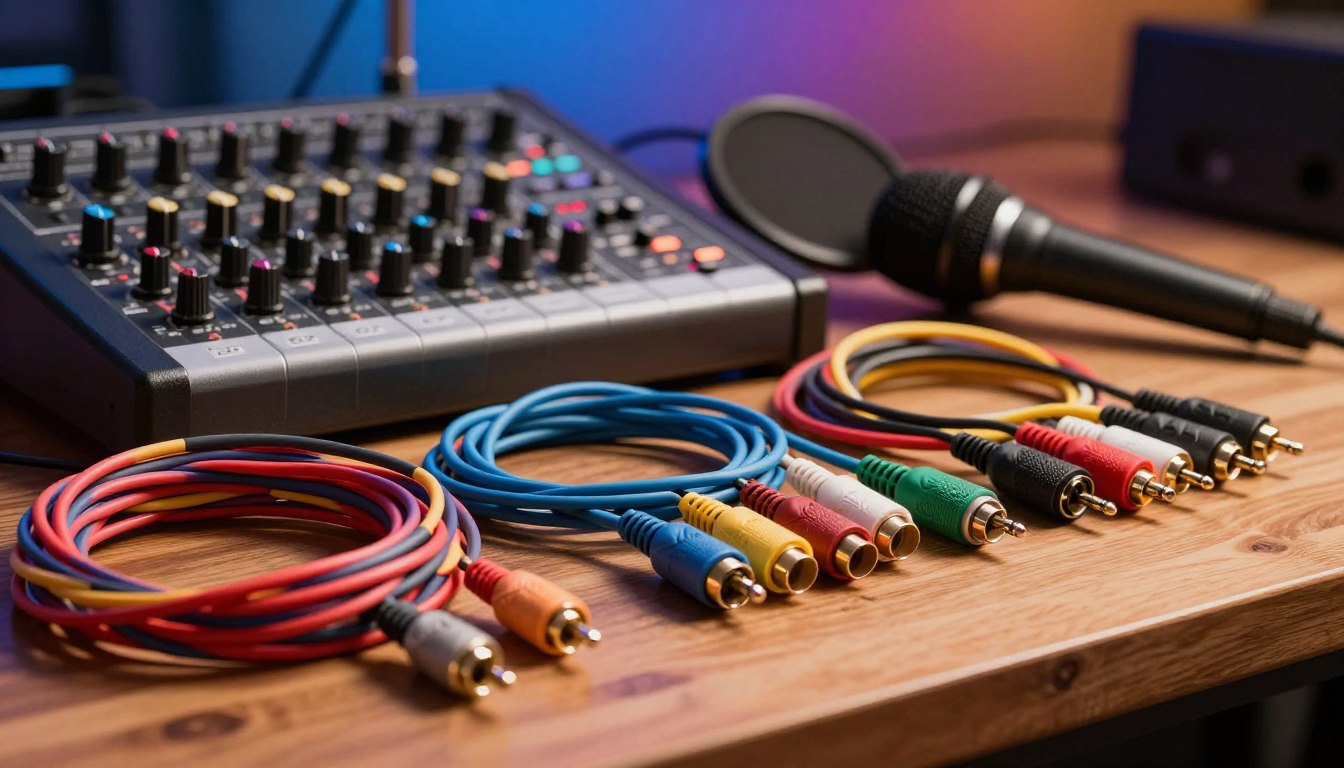
- RCA Cables: Used for consumer gear, they’re unbalanced and for short distances.
Choosing between balanced vs unbalanced cables depends on your needs. Balanced cables, like XLR, reject noise better and are best for pros. Unbalanced cables, like TS and RCA, are good for home use and short distances.
Knowing about types of audio cables helps optimize your live sound setup. At Ghetto Superstars, we aim to make your celebrations unforgettable with our DJ services and sound equipment advice.
The Essential Cable Types for Live Sound
To have a great live sound experience, knowing the key cable types is vital. Live sound cables are more than just connectors. They are the heart of your audio setup, affecting the sound quality for your audience.
XLR Cables
XLR cables are a must-have in live sound setups. They are balanced cables made to send audio signals far without losing quality. This makes them perfect for linking microphones to mixers and other gear in live shows.
One big plus of XLR cables is they fight off noise and interference. This keeps the signal clean and clear. This is key in live settings where many devices are running at once.
TRS and TS Cables
TRS (Tip-Ring-Sleeve) and TS (Tip-Sleeve) cables have different roles in live sound. TRS cables are for headphones or stereo sends and returns. TS cables are for instruments like guitars and keyboards.
It’s important to know the difference between TRS and TS cables. Using the wrong one can harm your sound quality or even damage your gear.
RCA Cables
RCA cables, often seen in home audio, also have a spot in live sound. They connect devices like CD players or other home gear to pro audio equipment.

| Cable Type | Primary Use | Key Benefit |
|---|---|---|
| XLR | Microphone connections, long-distance signal transmission | Noise rejection, high-quality signal |
| TRS | Headphones, stereo sends and returns | Balanced stereo signal |
| TS | Instrument connections (guitars, keyboards) | Simple, effective instrument connection |
| RCA | Consumer audio equipment connections | Compatibility with consumer gear |
Choosing the Right Cable for Your Setup
Choosing the right cables for your live sound setup can be tough. But with the right help, you can make good choices. At Ghetto Superstars, we know how important the right equipment is for your events. We offer sound & PA systems, lighting, and event hosting across Uganda.
When picking cables, several things matter. You need to think about the cable type, length, durability, and if it fits with your gear. Let’s look at these factors to help you pick the best for your live sound or music production setup.
Factors to Consider
First, understand the different cable types and their uses. Instrument cables connect instruments to amplifiers or mixers. Patch cables link equipment within a rack or between racks.
- Instrument cables types vary based on the instrument and the environment in which they are used.
- Patch cables explained: They are typically shorter cables used for signal routing between devices.
Experts say, “The quality of your cables can significantly impact the overall sound quality.” This shows how important it is to pick the right cables for your setup.
“Cables are like the veins of your sound system, they carry the lifeblood of your music. Choose them wisely.”
Length and Durability
The cable length is key for a neat setup and good signal quality. Cables that are too long can be a hassle, while too short may not reach.
| Cable Length | Application |
|---|---|
| Short (1-3 meters) | Ideal for patching between devices in close proximity. |
| Medium (3-10 meters) | Suitable for connecting instruments to nearby amplifiers or mixers. |
| Long (10+ meters) | Best for connecting stage boxes to the main mixing console. |
Compatibility with Equipment
It’s vital to make sure your cables work with your gear. XLR, TRS/TS, and RCA cables each have their own uses and can’t be swapped in all cases.
At Ghetto Superstars, we have a wide range of cables and equipment for your needs. Whether it’s for a live event or music production, we’re here to help you succeed.
How to Properly Connect Live Sound Cables
Connecting live sound cables right is key to a great audio experience. The quality of your cables and how you connect them can greatly affect your event. We’ll show you how to connect your cables correctly and what mistakes to avoid.
Step-by-Step Connection Guide
To get a smooth audio experience, follow these steps:
- Identify Your Cables: Know the different cables you have. XLR cables are for microphones, and TRS/TS cables are for instruments and speakers.
- Check Your Equipment: Turn off your equipment before connecting. This prevents loud noises or damage.
- Connect Cables Securely: Make sure all connections are tight. A loose connection can cause poor sound or signal loss.
- Route Cables Properly: Keep cables organized and away from power sources to avoid interference.
Common Mistakes to Avoid
Even with the right cables, wrong connections can ruin sound quality. Here are some mistakes to avoid:
- Mismatched Cables: Using the wrong cable type can harm sound quality or damage equipment.
- Overlooking Cable Length: Using cables that are too long or too short can mess up your setup and sound quality.
- Poor Cable Management: Not organizing cables can cause tangles, signal problems, and a messy setup.
By following this guide and avoiding these mistakes, you can ensure top-notch audio for your event. Remember, great live sound isn’t just about the equipment. It’s also about how you use it.
Understanding Cable Specifications
Cable specs can seem tough, but knowing the basics is key for live sound setups. When picking cables, look at a few important factors that affect sound quality.
Ohm Rating Explained
The ohm rating, or impedance, is a big deal for audio cables. It shows how much resistance to electrical current flow. It’s important to match your cables’ impedance with your gear to avoid signal loss and distortion. For example, a low-impedance mic (about 200 ohms) should go to a high-impedance input (usually 1,000 ohms or more).
Shielding and Its Importance
Shielding is also key in cable specs. It keeps your audio signal safe from EMI and RFI. Good shielding means a cleaner signal and less chance of noise and distortion. There are foil and braided shields, each with its own benefits.
Cable Gauge Considerations
Cable gauge, or wire thickness, matters too. A thicker gauge (lower number) has less resistance and works well for long cables. But, thicker cables are less flexible and harder to handle. Finding the right balance between gauge and flexibility is essential for a good live sound setup.
Knowing these cable specs helps you choose the right cables for your live sound or music production. By looking at ohm rating, shielding, and gauge, you can get the best sound quality.
“The right cables can make all the difference in your live sound experience. Invest in quality, and you’ll reap the rewards in sound quality and reliability.”
Essential Tools for Cable Management
Good cable management is key for a live sound setup. It makes your stage look better and keeps cables safe from damage and signal loss. At Ghetto Superstars, we know how important a neat cable system is for great shows and safety.
We’ve found three must-have tools for cable management: cable ties and organizers, labeling systems, and storage solutions. Let’s look at each to see how they help your live sound.
Cable Ties and Organizers
Cable ties and organizers fight cable mess. They keep cables neat and easy to find during shows. Cable ties are great for securing cables to things like racks or stages. Cable organizers help manage cables in your equipment racks or on stage.
Labeling Systems
Labeling your cables is a big help. It lets you quickly know which cable is for what. This saves time and avoids mistakes. For more tips on cable management, check out this expert advice on cable management.
Storage Solutions
Storing cables right keeps them in good shape. Tools like cable reels, bags, or cases protect cables when not in use. This keeps your cables quality high and makes them easy to carry to events.
| Tool | Purpose | Benefits |
|---|---|---|
| Cable Ties and Organizers | Secure and manage cables | Reduces clutter, prevents damage |
| Labeling Systems | Identify cables | Saves time, reduces errors |
| Storage Solutions | Protect cables when not in use | Extends cable life, eases transport |
Using these tools can greatly improve your live sound setup. At Ghetto Superstars, we also offer free AI music tools. These help with DJ names, event ideas, setlists, and more, making music projects easier to manage.
Troubleshooting Common Cable Issues
Dealing with cable problems is a must for live sound professionals. It’s important for both new and experienced sound engineers. We’ll look at common issues like no sound, interference, and loose connections. You’ll learn how to fix these problems.
No Sound or Interference
Getting no sound or dealing with interference is frustrating. It can happen for many reasons, like bad cables, wrong settings, or broken equipment.
- Check your cables for any visible damage or wear.
- Ensure that all connections are secure and not loose.
- Verify that your equipment settings are correct and match the cable specifications.
Common Causes of Interference:
| Cause | Description | Solution |
|---|---|---|
| Electromagnetic Interference (EMI) | Interference from other electronic devices | Use shielded cables, keep cables away from other electronics |
| Radio Frequency Interference (RFI) | Interference from radio frequencies | Use RFI-resistant cables, check for nearby radio transmitters |
Loose Connections
Loose connections can lead to sound problems or signal loss. It’s important to make sure all connections are tight.
- Inspect all cable connections for any signs of wear or damage.
- Tighten any loose connections, but avoid over-tightening, which can damage the connectors.
- Use cable ties or organizers to keep cables managed and reduce strain on connections.
Repairing Damaged Cables
At times, cables get damaged and need fixing or replacing. Knowing how to repair them can save time and money.
- Identify the damaged section of the cable.
- Cut out the damaged section and rejoin the cable using appropriate connectors or splicing techniques.
- Test the cable thoroughly after repair to ensure it’s working correctly.
By using these troubleshooting tips, you can quickly solve common cable problems. This ensures a smooth live sound experience. Remember, keeping your cables and equipment in good shape helps prevent many issues.
Best Practices for Cable Maintenance
Keeping your live sound cables in good shape is key for great sound quality. It also helps your equipment last longer. We’ll look at how to keep your cables in top condition. This includes checking them often, storing them right, and cleaning them.
Regular Inspection
Checking your cables regularly is a must. Look for signs of wear like fraying or corrosion. Also, check the connectors for damage or dirt. It’s best to inspect your cables before and after each use to catch any issues early.
When you check your cables, pay extra attention to their type. Balanced cables are better at avoiding noise than unbalanced ones. Knowing the difference between balanced and unbalanced cables helps with maintenance.
Proper Storage Techniques
Storing your cables right is as important as checking them. Coil them correctly to avoid wire damage. Use cable ties or organizers to keep them neat. Labeling your cables makes setup faster.
Don’t bend or twist your cables too much. This can harm the insulation and wires. Store them in a dry, cool spot, away from sunlight.
Cleaning Your Cables
Cleaning your cables often stops dirt from affecting sound quality. Use a soft cloth to clean them. For a deeper clean, use a cable cleaning solution. Always disconnect your cables before cleaning to avoid damage.
“The care and keeping of cables is a critical aspect of maintaining a professional live sound setup. By following these best practices, you can ensure your cables remain in top condition and your sound quality is always optimal.”
By following these cable maintenance tips, you can make your cables last longer. Regular checks, proper storage, and cleaning are simple steps. They help keep your equipment in great shape and sound quality high.
Conclusion: Enhancing Your Live Sound Experience
Quality cables are key to great sound. Knowing the types of cables is important for top-notch live sound. Whether you’re using XLR cables for microphones or TRS cables for instruments, picking the right one is essential.
Investing in Quality Cables
Choosing quality cables, like those with good shielding and gauge, can really boost your live sound. Learning about speaker cables can help you pick the best ones for your speakers.
Ghetto Superstars’ Services and Support
At Ghetto Superstars, we offer many services and tools for your events and music projects. We have everything from DJ services to sound and PA systems. We help you make your celebrations unforgettable.
Explore Our Resources
We also have free AI music tools and DJ resources to improve your live sound. By checking out our guides on TRS and XLR cables, you can enhance your live sound setup.