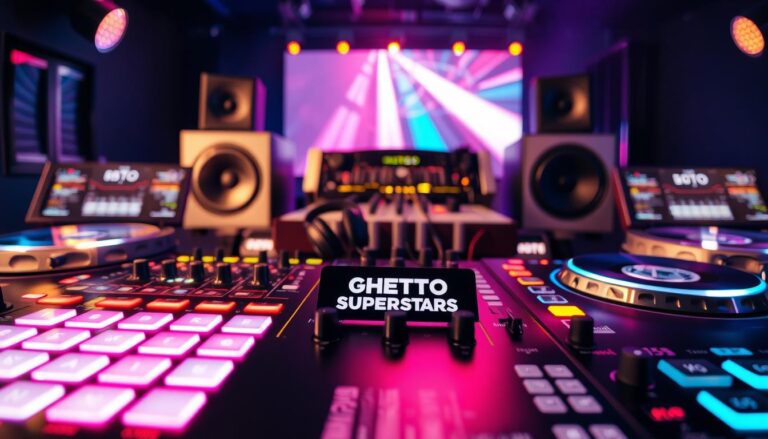
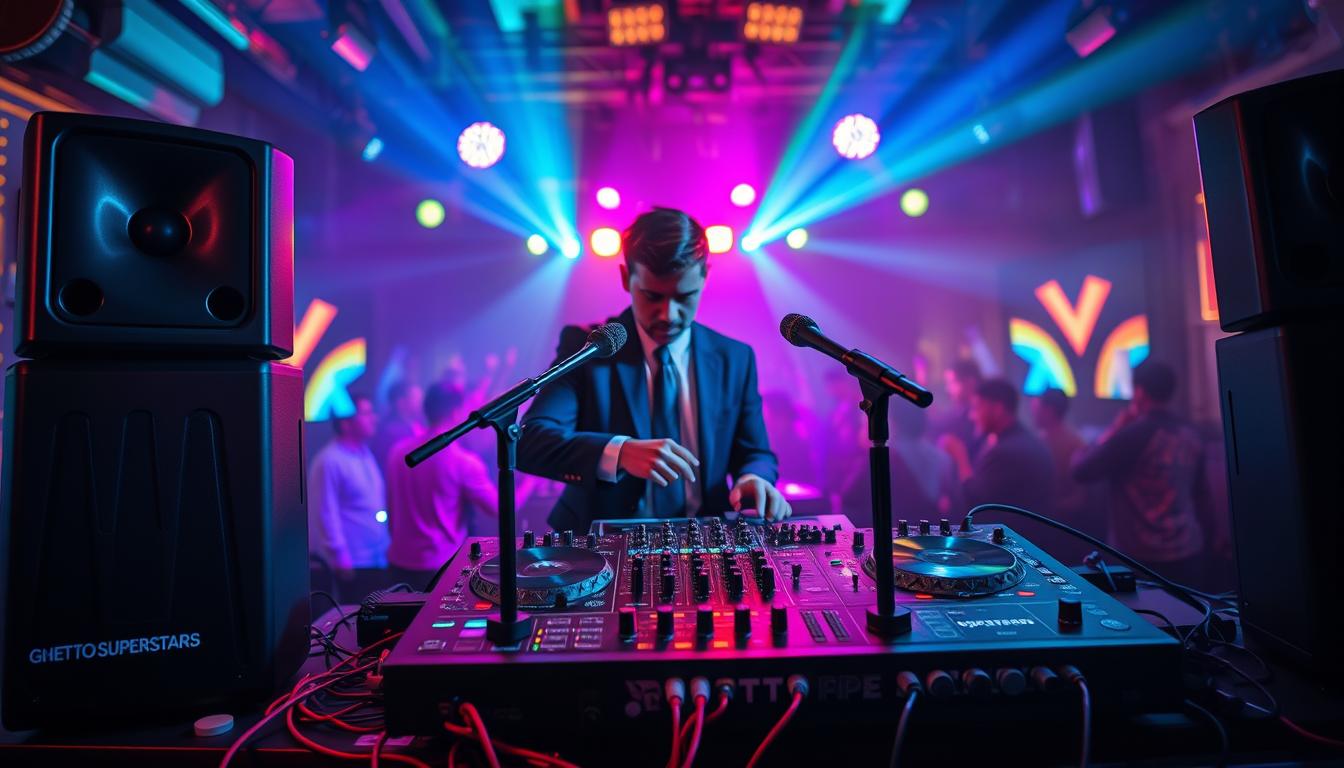
Surprising fact: 72% of local gigs lose crowd energy because the speaker setup can’t deliver clear bass at club volumes.
We build gear that protects your reputation and your crowd’s vibe. We know you’re not just buying speakers. You’re crafting a live experience that powers bookings and memories.
In this guide we show what “good enough” looks like for a paid gig. We cut through marketing fluff. You’ll learn which specs mean real-world loudness and clean tone.
Match sound to the space. House shows, small venues, weddings, corporate events, and parties need different coverage and bass choices. We explain venue size, active vs passive, sub needs, connectivity, portability, and budget.
We’re Ghetto Superstars: a creative hub that backs you with Free AI Music Tools, mixes, and pro services across Uganda. Gig-ready advice. Community-first support. Let’s make your next set sound unforgettable.
Key Takeaways
- Buy gear that protects your reputation and fills the room.
- Ignore marketing numbers; focus on real-world clarity and headroom.
- Match audio coverage to event type and venue size.
- Prioritize clear mids, smooth highs, and controlled bass.
- Use our free AI tools and mixes to stay creative between gigs.
What DJs Actually Need From a PA (and What You Can Skip)
Your speakers are the first promise you make to a crowd. We keep advice simple so you buy less junk and deliver more nights that matter. Use our Free AI Music Tools to plan setlists and maps for sound checks.
Speaker types and when to pick each
Speaker choices fall into three camps. Portable PA-style speakers move air and survive load-ins. Studio monitors live in a practice studio — great for mixing, not for dance floors. A bluetooth speaker is handy for warmups, beach hangs, and emergency fill, but it can struggle with proper inputs and gain staging.
Typical DJ signal path
Most gigs run controller to speaker or controller to mixer to speaker. Mic routing sits after the mixer so MC levels stay clean. Stereo coverage beats one box in most rooms; use mono only in tight spaces.
Real-world features that matter
Class-D amplification gives efficient power and less heat. DSP helps you tune quickly in strange rooms. Rugged cabinet design prevents rattles on the road. Built-in amplifiers and balanced inputs are great when runs are long; RCA works for short cables.
| Feature | Why it matters | When to choose |
|---|---|---|
| Class-D amplification | Efficient power, lighter amps | Mobile gigs, long sets |
| DSP | Room tuning, presets | Venue changeovers, quick fixes |
| Durable cabinet | Reduces rattles, survives load-ins | Frequent travel |
| Bluetooth speaker | Portable, easy pairing | Background music, small gatherings |
Skip list: flashy gimmicks, weak connectivity, and fragile builds that fail on the road. Follow practical teachings you’ll hear from pros like Phil Morse — keep it simple, keep it strong.
Need a quick checklist before you buy? Check our guide on why DJs wear headphones: why DJs wear headphones.
How to Choose PA systems for DJs Based on Venue Size and Volume Goals
When the room fills, your gear should stay calm. That calm comes from the right mix of power and driver size, not marketing hype.
Think in practical ranges. 1000W-class rigs often cover smaller rooms and controlled volume. 2000W-class gear makes sense when you need louder shows, long runs, or outdoor headroom.
Driver size guide
10-inch — tight, focused low end. Great for low-volume sets and quick load-ins.
12-inch — the sweet spot. Works well up to about 150 people and balances punch with portability.
15-inch — fuller low-mids and effortless loudness. Best when you’ve got 200 people or more and want strong bass without strain.
Audience benchmarks & indoor vs outdoor
100 people: Two compact speakers or a 12-inch pair usually works.
150 people: Aim for 12-inch drivers with solid power or step up to 15-inch for dance-heavy parties.
200 people+: Choose 15-inch speakers and extra headroom—outdoors needs more volume because bass dissipates without walls.
Bear mind the redline trap: if you’ve got your speaker pinned, you lose clarity. Buy one step above your usual crowd and you’ll keep the dancefloor happy all night.
Powered (Active) Speakers vs Passive Speakers: Picking the Right System Type
One decision—active or passive—shapes how fast you set up and how you grow later. We keep this simple so you can buy once and grow smart.

Why powered speakers speed up mobile work
Powered speakers include built-in amplifiers inside the cabinet. That means fewer cables, faster setup, and consistent amp matching every night. Less time tweaking. More time playing. If you do frequent load-ins, active speakers cut failure points and make troubleshooting quick.
When passive rigs still make sense
A passive speaker needs an external amp. That gives you flexibility to mix and match amplifiers and upgrade piecemeal. Passive setups win when you want long-term tuning, easy swaps, and scalable expansion.
Hybrids and master/slave units
Some packages use one powered master to feed passive slaves. That’s convenient. Bear mind: the master is a single point of failure. You gain simplicity but lose some upgrade freedom.
- Quick filter: frequent load-ins → active; permanent rig and tuning love → passive.
- Amp tip: size amplifiers about 1/3 over speaker handling to keep sound clean and avoid stress.
- Need help? We can crew your shows — check our services active vs passive guide or visit our Services page to get pro support.
Subwoofers, Bass, and Full-Range Sound for DJ Music
Bass is not decoration; it’s the engine that drives a dancefloor. A proper subwoofer does more than add low notes. It frees your tops so mids and highs stay clear at club volumes.
Do you need a subwoofer?
If your usual crowd tops ~150 people or you play bass-heavy genres, add a sub. For small, chill gigs, full-range speakers can work. But a sub gives cleaner dynamics and more headroom.
Sub sizing basics
12-inch — minimum for small rooms and tight transport.
15-inch — stronger punch and fuller weight for mid-size events.
18-inch — club-style weight and extension for bigger spaces and outdoors.
One sub vs two subs
One sub often covers bass because low frequencies are non-directional. Add a second to increase output and headroom for larger crowds. Two also smooths coverage and reduces peaks.
- Placement matters: corners boost bass; outdoors needs more low-end power.
- Use DSP and a proper crossover to blend tops and sub without mud.
- Test with real mixes — grab our mixtapes and judge the low end with material you actually play: download mixes.
Connectivity, Inputs, and Portability Checklist Before You Buy
Before you buy, lock in the connections and transport features that keep a gig moving. We want your set to stay calm when the crowd gets loud. Small choices save time and headaches.
Input choices that keep you gig-ready
Expect XLR, 1/4-inch TRS, and RCA on most pro speakers. Match those inputs to your controller or mixer so you don’t scramble at soundcheck.
Tip: XLR and TRS are balanced and ideal for long cable runs. RCA is fine for short runs and quick hookups.
Bluetooth, battery units, and when to choose mains
Bluetooth is useful for breaks and background playlists. But run your main audio wired to avoid latency and dropouts.
Battery-powered speakers like a Mackie Thump Go-style unit give quick pop-ups and home practice freedom. JBL EON One Compact-style units add onboard mixing and app EQ when you need more control.
Portability: stands, handles, and real-world load-ins
Stands lift speakers to head height and protect them from spills. Pole mounts, sturdy handles, and a sensible cabinet shape make one-person load-ins safer.
| Item | Why it matters | When to choose |
|---|---|---|
| XLR / TRS (balanced) | Less hum, long runs, reliable output | Clubs, long cable runs, pro venues |
| RCA (unbalanced) | Simple hookup, common on controllers | Home, short runs, quick setups |
| Battery-powered unit | Portable, useful where power is limited | Pop-ups, ceremonies, home practice |
| Speaker stands & handles | Better projection, safer placement, easier transport | Paid events, outdoor setups, one-person crews |
Show-ready pack list
- Cables: XLR, TRS, RCA adapters
- Spare power lead and multi-outlet strip
- Small toolkit and gaffer tape
- Extra speaker pole and quick-release clamps
We’ve got Free AI Music Tools to help plan setlists and sound checks. Want a full crew? Check our Services in Uganda to scale your production.
Conclusion
Your next booking deserves a rig that arrives calm, sets up fast, and leaves the crowd smiling.
Match venue size to the right speakers, choose active or passive based on how you work, then add a sub if your music needs weight. Prioritize headroom, durable build, and reliable connectivity over cheap specs.
Reliability is the flex. The best gear shows up, sets up quick, and stays clean all night. Think in systems, not single purchases, so you can grow from home practice to full events without rebuying.
Need help? Use our Free AI Music Tools, grab fresh crew mixes at download mixes, or book pro support across Uganda via our services. Shop, support Ghetto Foundation, or call 📞 +256 741 669 338 — 📧 services@ghettosuperstars.co. Music connects us — and everything you need starts here.