At Ghetto Superstars, we’re all about making music moments unforgettable. We know that optimizing audio signals is essential for top-notch sound. That’s why gain staging is so important.
Gain staging means adjusting signal levels at each step in your setup. This ensures your sound is just right. It helps create a mix that grabs your audience’s attention. For more on improving your sound, check out our article on advanced looping techniques for pro DJs.
Key Takeaways
- Proper gain staging ensures high-quality sound
- Optimizing audio signals is key for live sound setups
- Gain staging involves adjusting signal levels at each stage
- A balanced mix captivates the audience and enhances the music experience
- Ghetto Superstars provides professional DJ services that create memorable celebrations
What is Gain Staging?
Gain staging is about finding the right balance between sound and noise. It’s all about making sure the good sound is loud enough and the bad sound is quiet. This balance is key to making audio that people love.
Defining Gain Staging in Audio
Gain staging is about controlling audio levels as they move through a sound system. It’s about adjusting each stage to get the best digital audio level. This ensures the sound is clear but not distorted.
Sound engineers use gain staging to avoid distortion and noise. This makes the sound cleaner and more professional. It’s all about understanding how different parts of the system work together.
Importance in Live Sound Settings
In live settings, gain staging is super important. It affects how the audience hears the music. Good gain staging can turn a bad sound into a great one.
We aim to bring people together through music and help charities. Gain staging helps us make our live events unforgettable. It’s essential for anyone who wants to deliver top-notch sound.
Why Gain Staging Matters
Gain staging is key to delivering clear audio to your audience. At Ghetto Superstars, we know how vital it is. It’s not just technical; it’s an art that makes listening better.

Preventing Distortion
Gain staging is important because it prevents distortion. Distortion can make sound harsh and unpleasant. By adjusting the analog gain structure, we keep the signal clean and strong.
Distortion happens when the signal is too loud. We adjust gain stages to keep the signal just right.
Enhancing Audio Clarity
Gain staging also boosts audio clarity. When gain is set right, audio signal processing works better. This is key in live sound, where conditions can change.
By optimizing each stage, we get sound that’s clear and detailed. This is what makes sound engineers stand out.
We provide free AI music tools for DJ names, event ideas, and more. Using these tools and understanding gain staging can elevate your live sound events.
The Gain Staging Process
To get the best out of your audio gear, learning the gain staging process is key. It’s a series of steps to get your sound right. This is vital for top-notch audio quality.
Setting Initial Levels
The first thing is to set your initial levels. This starts with your audio source, like a mic or instrument. You want to make sure the signal is strong but not too loud. This keeps your sound clean and clear.
For more tips on improving your audio setup, check out mastering track layering and DJ mixing. These can help you understand gain staging better.
Adjusting Signal Flow
After setting your levels, you need to adjust the signal flow. This means managing how your audio moves through your gear. It’s important to keep each step clear and free of noise. This helps avoid distortion and keeps your sound sharp.
By setting levels right and adjusting signal flow, you get a proper gain structure. This boosts your sound quality. It makes your music sound better and more professional.
Common Gain Staging Mistakes
Understanding gain staging is key, but avoiding common mistakes is just as important for great sound. Setting up your live sound equipment can lead to habits that harm your audio. It’s easy to fall into these traps.
We’ve all made mistakes that hurt our sound. Knowing these pitfalls helps us avoid them. This ensures our sound is always top-notch. Whether you’re experienced or new, avoiding these mistakes is essential for a great audio experience.
Overdriving Inputs
One big mistake is overdriving your inputs. Pushing your input levels too high introduces distortion. This makes your sound fuzzy and unpleasant.
To avoid this, start with conservative gain levels. You can adjust them later. Keep an eye on your input meters. Aim for levels around -20 dB to -15 dB.
Ignoring Output Levels
Ignoring output levels is another mistake. High output levels can cause distortion, even with correct input levels. This is because the output stage can become overloaded.
To prevent this, monitor your output levels as closely as your input levels. Adjust your output gain to match your equipment’s capabilities and your sound system’s needs.
Here’s a summary of common gain staging mistakes and their fixes in a tabular format:
| Mistake | Consequence | Fix |
|---|---|---|
| Overdriving Inputs | Distortion, fuzzy sound | Set conservative gain levels, monitor input meters |
| Ignoring Output Levels | Distortion, clipped signal | Monitor output levels, adjust output gain |
By being mindful of these common gain staging mistakes, you can ensure your live sound setup delivers the best audio quality. Need professional support for your next event? We offer DJ services, sound & PA systems, lighting, and event hosting across Uganda.
Gain Staging Techniques
To make sure your live sound setup is top-notch, learning gain staging is key. At Ghetto Superstars, we know that the right gain staging is vital for any live event.
Music brings us together. By using the best gain staging, we can make our live sound even better.
Using Meters Effectively
Meters are a must for gain staging. They let us check our audio levels and keep them just right. This is important for a clear signal-to-noise ratio and avoiding distortion.
It’s important to know the different meters and when to use them. Peak meters show the highest signal level, while VU meters show the average. By using both, we get the best digital audio levels.
Balancing Your Signal Chain
Another key part of gain staging is balancing your signal chain. This means adjusting the gain at each step to get the perfect level. It’s about finding the right mix between input, output, and processing stages.
A balanced signal chain not only sounds better but also makes mixing easier. Here’s a simple table to show how to balance your signal chain:
| Stage | Gain Adjustment | Purpose |
|---|---|---|
| Input Gain | Adjust to optimal level | Set the initial signal level |
| Processing Stages | Adjust according to need | Enhance or correct the signal |
| Output Gain | Adjust to final level | Ensure the signal is strong enough for output |
By learning these gain staging techniques, we can make sure our live sound setups are always at their best. This means delivering top-quality audio that makes the experience better for everyone.
Tools for Effective Gain Staging
Effective gain staging starts with the right equipment. This includes audio interfaces and mixing consoles. Understanding how to use these tools is key. It ensures your sound is clear and engaging for your audience.
Understanding Audio Interfaces
An audio interface connects your microphones or instruments to your computer. It’s vital for analog gain structure. When picking an audio interface, think about the number of inputs, connectivity, and preamp quality.
Knowing how to set gain levels on your audio interface is important. Aim for a strong signal without distortion. Most interfaces have meters to help you adjust gain levels.
Utilizing Mixing Consoles
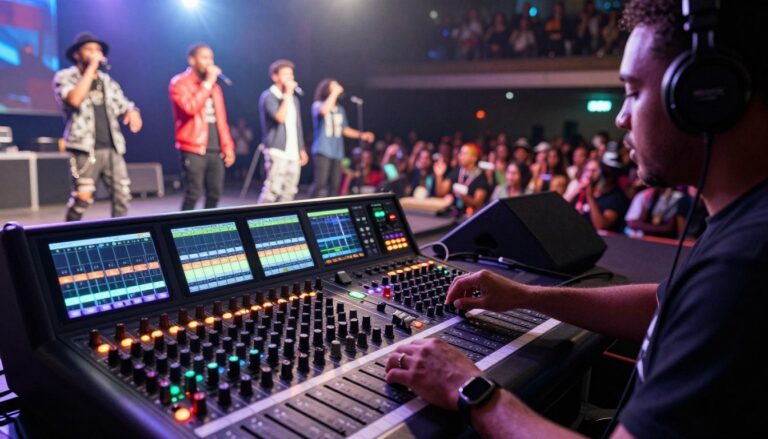
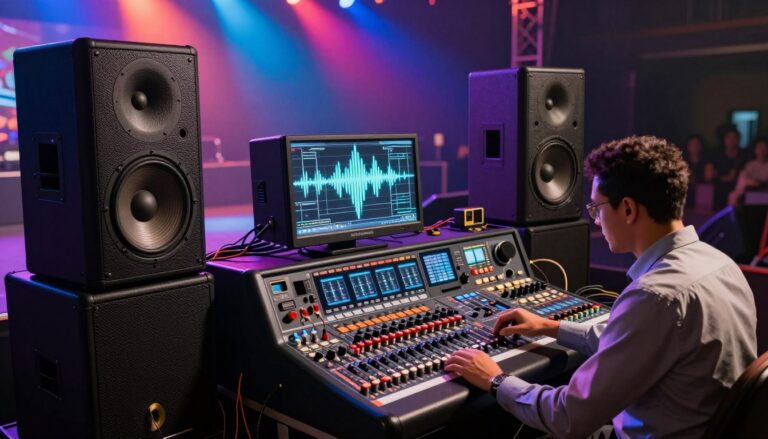
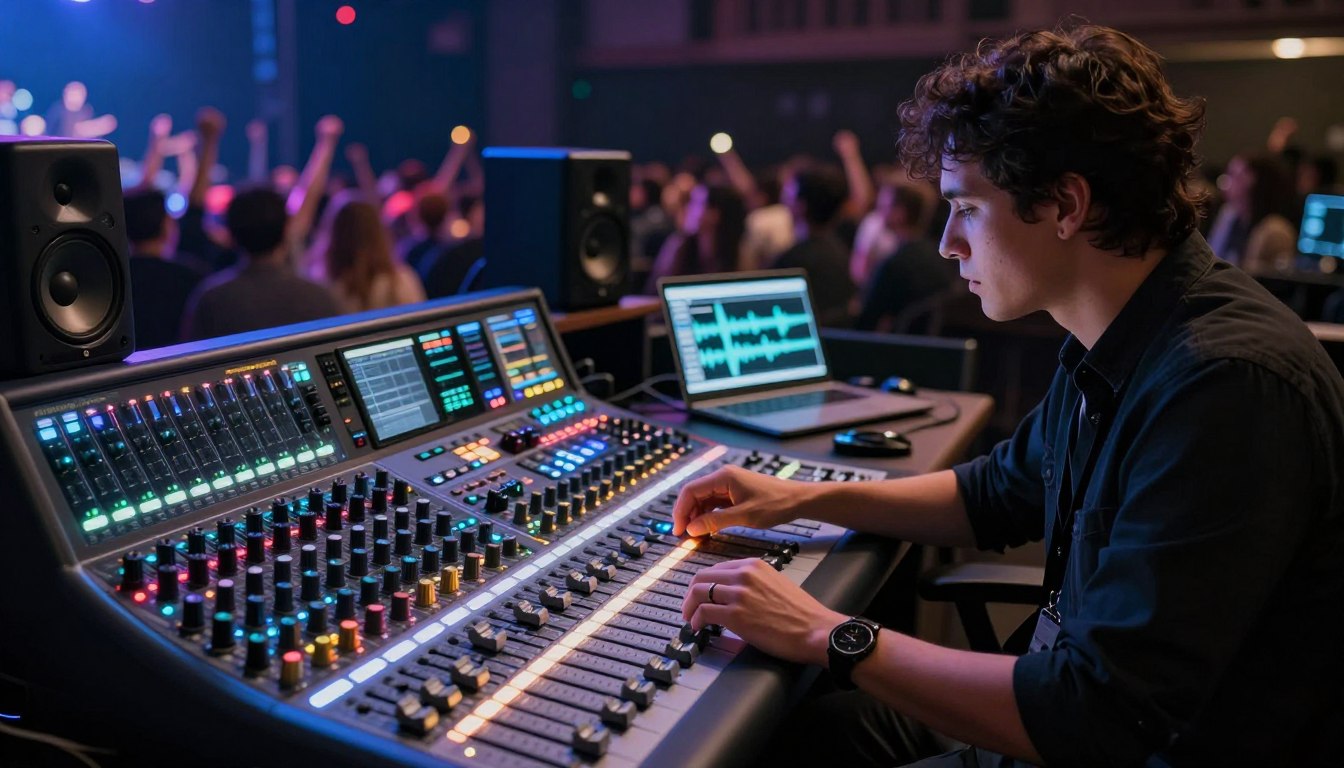
A mixing console is key for gain staging in live sound. It lets you control levels, adjust EQ, and add effects. Start by setting gain levels on each channel, then adjust faders for the right mix.
Mixing consoles offer a clear view of your signal flow. Use meters to monitor levels and prevent distortion. Many consoles also have effects and other features to improve your sound.
Mastering audio interfaces and mixing consoles boosts your gain staging skills. These tools are essential for high-quality sound in any setting. Check out our free AI music tools to enhance your music experience.
Gain Staging in Different Environments
Gain staging isn’t a one-size-fits-all solution. Different places need different approaches for the best sound. Whether it’s a small venue or a big concert, knowing how to adjust gain staging is key.
Considerations for Small Venues
In small venues, the goal is clear sound without distortion. Gain staging must be balanced. You want the signal to be strong but not too strong.
Start with low gain levels and slowly increase them. This helps avoid overdriving the inputs. In small venues, this is important to prevent feedback.
“The right gain staging can make all the difference between a muddy, distorted sound and a clear, crisp one.”
Adapting for Large Concerts
Large concerts have their own set of challenges. With more instruments and a bigger crowd, the sound system must be strong. Gain staging here means setting the right levels and optimizing the signal chain for the event’s size.
For big concerts, using audio engineering techniques is vital. Noise gates and compressors help manage the sound. This keeps the sound clear and balanced for everyone in the venue.
| Venue Size | Gain Staging Considerations | Key Techniques |
|---|---|---|
| Small Venues | Balancing sound without overpowering the audience | Starting with lower gain levels, careful monitoring |
| Large Concerts | Managing complex sound systems, optimizing signal chain | Using noise gates, compressors, robust sound systems |
Adjusting your gain staging for your venue ensures great sound for your audience. Whether it’s a small club or a big festival, proper gain staging is essential.
The Role of Equipment
To get the best sound, understanding the role of equipment in gain staging is key. The gear we pick greatly affects our sound quality. By choosing wisely and keeping signal levels right, we can make sure our sound is always great.
Choosing the Right Gear
Picking the right equipment is essential for good gain staging. At Ghetto Superstars, we use our knowledge to pick the best gear for our events. We think about the event type, venue, and audience size when making our choices.
High-quality audio interfaces and mixing consoles are must-haves. They help get a clean and strong signal. We also look at the quality of microphones, cables, and other gear that can affect sound quality.
| Equipment | Key Features | Benefits |
|---|---|---|
| Audio Interfaces | High-resolution conversion, low latency | Improved sound quality, reduced signal delay |
| Mixing Consoles | Multiple input channels, flexible routing | Enhanced control over signal flow, better mixing capabilities |
| Microphones | High sensitivity, durable construction | Clearer sound capture, withstands heavy use |
Maintaining Optimal Signal Levels
After picking the right gear, keeping signal levels just right is next. This means checking and adjusting gain levels often to avoid distortion and keep sound clear.
We suggest using gain staging tools and signal meters to watch and tweak levels live. This way, we can spot and fix problems early.
You can also check out DJ and audio gear in our shop to find what you need. By using the right gear and gain staging, you can get an amazing sound experience.
Advanced Gain Staging Strategies
Improving your gain staging means learning advanced techniques. You’ll discover how to make your live sound setup sound amazing.
Implementing Noise Gates
Noise gates help control unwanted noise in your signal chain. They open or close based on a threshold, helping to reduce the signal-to-noise ratio and keep your sound clean.
- Find the noise floor in your setup.
- Set the threshold just above this level.
- Adjust the attack and release for a natural sound.
Using noise gates well can make your audio much clearer. This is very helpful in live settings where background noise is a problem.
Employing Compressors
Compressors are key in managing audio levels and keeping them consistent. They reduce loud signals, helping to prevent distortion and clipping, and keeping optimal digital audio levels.
- Set the compressor threshold to catch peak signals.
- Adjust the ratio for the level of compression you want.
- Make up for the reduced volume with makeup gain.
Using compressors right helps you get a balanced sound. This is key for live events, where the audio environment can change a lot.
At the Ghetto Foundation, we aim to empower sound professionals. By mastering advanced gain staging, you can elevate your live sound setups. This helps make the music community more vibrant.
Troubleshooting Gain Staging Issues
At Ghetto Superstars, we know how important it is to fix gain staging problems. Even with the best setup, issues can pop up. But knowing how to find and solve them can really help.
Identifying Problem Areas
The first step is to find where the problem is. Check your analog gain structure from start to finish. Look for distortion or unwanted noise, as these are signs of gain issues.
Using your mixing console’s metering tools is a good way to find problems. These tools show you signal levels and where gain is off. For example, if your input levels are too high, you’ll see clipping on your meters.
Quick Fixes for Common Problems
After finding the problem, it’s time for quick fixes. If you’re getting distortion from high input levels, lower the gain on your input devices. If your signal is too low, you might need to increase the gain. But be careful not to add noise to your audio signal processing chain.
Another common problem is not setting gain right across devices. Make sure each device is set correctly and gain is right for the next one. You might need to adjust output levels to match input needs.
“The key to successful gain staging is not just about setting levels, but understanding how each component in your signal chain interacts with the others.”
If you’re having trouble, don’t worry. Reach out to experts like Ghetto Superstars for help. You can book or ask about our services by calling +256 741 669 338 or emailing services@ghettosuperstars.co.
Practical Tips for DJs and Event Planners
As DJs and event planners, we know how key proper gain structure is for top-notch sound. When planning live events, making sure your audio setup is top-notch is a must.
Setting Up for Live Events
To get ready for a live event, first check your gear. Make sure everything works well together. Use audio engineering techniques to tweak your gain levels right, starting from the source.
| Step | Description | Gain Level Adjustment |
|---|---|---|
| 1 | Check equipment compatibility | Initial gain setting |
| 2 | Adjust gain levels at the source | Optimize for signal-to-noise ratio |
| 3 | Balance the signal chain | Ensure consistent levels throughout |
Ensuring Audio Quality Throughout
To keep audio quality throughout the event, keep an eye on your signal levels. Adjust as needed. Be ready to tweak settings based on the venue and audience.
By sticking to these tips and using audio engineering techniques, your live events will be unforgettable. We offer professional DJ services that make memorable celebrations with purpose. Proper gain staging is key to our service.
Conclusion: Mastering Gain Staging
Music brings us together, and quality sound is key. Gain staging is vital for delivering top-notch audio. It helps us create unforgettable moments.
Ongoing Education and Practice
Learning gain staging is a journey that never ends. It takes hard work and practice to get better. By honing our audio skills, we make sure every event is a hit.
Refining Your Craft
Our goal is to provide exceptional sound. We keep learning about gain staging to improve our events. As sound experts, you can also make a big difference by focusing on gain staging.
This focus not only enhances the music but also strengthens our connection with it. Music is a powerful bond that unites us all. Everything you need to excel starts here.