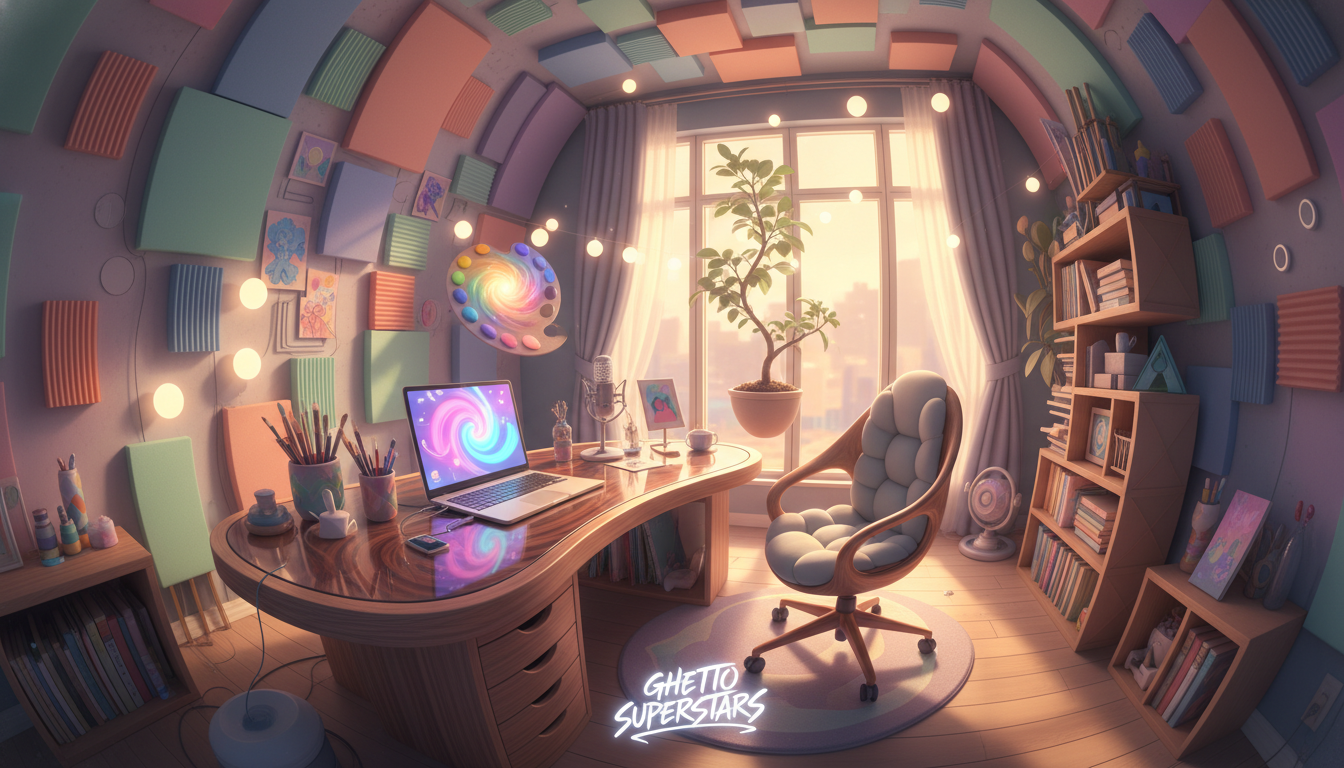
We believe a tight room can still sound massive. You can craft a compact, pack-down-ready setup that keeps workflow first and vibes close behind. This guide shows practical steps for a small space setup that feels like a real studio.
We define “portable” here as fast pack-down, minimal footprint, and gear you can move from a desk today to a different room tomorrow. That means smart furniture choices, IKEA-level hacks, and compact gear that punches above its size.
Windows inspire but complicate acoustics. Natural light lifts creativity, while reflections demand clever treatment. We walk you through tradeoffs—monitors vs headphones, light vs reflections—and how to win with movable solutions.
Look for style cues: LED-lit mood, plant-forward warmth, minimal-clean lines, or organized chaos. Each vibe can fuel creativity. We also point you to Ghetto Superstars for Free AI Music Tools (DJ names, setlists) and fresh mixes for quick inspiration.
What’s next: expect step-by-step sections on constraints, layout, compact gear, movable acoustics, lighting, plants, and pack-down systems. If you want services or contact info, we’ll offer that as an optional next step later on.
Key Takeaways
- You can build a compact studio that feels professional with focus on workflow.
- “Portable” means fast pack-down and a minimal footprint.
- Balance natural light and acoustics with movable treatments.
- Style—LED, plants, or clean minimal—boosts creativity and vibe.
- Ghetto Superstars offers Free AI Music Tools and mixes for inspiration.
Start With Constraints: What “Portable” Really Means in a Small Space Studio
Begin with a clear mission — what will you do most in this compact space?
We pick a primary use first. Are you tracking vocals, mixing on headphones, building beats, or prepping DJ sets? Each path changes gear, layout, and workflow.
Measure before you buy. Note desk space width and depth, wall space for arms or shelves, and how many outlets sit where you need them. Remove extra furniture. Face your setup to a wall to cut visual clutter.
Constraints are creative fuel. A tight room forces choices. You move faster. You spend less time hunting cables and more time making music.
“Trim the excess. Keep what earns its footprint.”
- Core workflow: laptop + interface + headphones, then add gear that earns its place.
- Teardown plan: pouches, a single cable bundle, a reset ritual to pack down fast.
- Signal map: mic → interface → laptop → headphones/monitors to avoid a cable maze.
Need a creative nudge? Use our Free AI Music Tools at Ghetto Superstars to test DJ names, setlists, and energy before finalizing the use case. For shared-space tips, check this practical guide.
| Checklist | Measure | Action |
|---|
| Desk space | Width / Depth | Pick desk that fits core gear |
| Wall space | Vertical clearance | Mount arms, shelves, or acoustic panels |
| Power | Outlet count & location | Avoid long extension chains; use a single go-bundle |
Portable home studio ideas for Small Spaces That Actually Work
Small rooms demand smart moves — think vertical, corner-first, and workflow-led layouts. We keep this simple so you can build fast and play sooner.
Build a corner workstation to keep floor space open
Push a compact desk into the corner. That clears the center of the room for movement and gear carts. Add a small lamp and a single mic arm. You save real inches and keep focus where it matters.
Use an L-shaped desk or a narrow desktop rack to maximize functionality
Choose a 24″ wide board or a slim L-desk. Tuck your chair under when you’re done. The extra surface gives space for controllers and a laptop without cluttering the floor.
Mount screens and speakers on arms to free up workspace
Clamp arms to the desk. Lift monitors and speakers off the surface. You gain shelf room for racks, controllers, or a small mixer.
Go vertical with shelves, slide-out drawers, and wall-mounted storage
Install floating shelves and pegboards. Use slide-out drawers to stash cables and mics. For more small-space art solutions see small-space art solutions.
We make music together. Small changes add up. Start with one tweak and build the rest as you play.
FAQ
What does “portable” mean for a small space music setup?
We mean a rig that moves and adapts. It should fit a corner, fold or stack, and break down fast for storage. Think compact gear, a slim desk or rack, and wall mounts so you can clear the floor in seconds. The goal: performance-grade sound without a permanent footprint.
How do we decide between recording, mixing, beat-making, or DJ prep?
Start with use. Record vocal takes? Prioritize a good mic, isolation shield, and audio interface. Mix? Invest in monitors, a small acoustic treatment kit, and monitor stands. Beat-making or DJ prep calls for a MIDI keyboard, controller, and a tidy workflow with cable management. We recommend listing daily tasks and letting that drive gear choices.
How much desk and wall space do we need before buying equipment?
Measure first. Allocate space for monitors at ear height, a keyboard controller, and your interface. Leave clearance for monitor stands or arms and at least one power outlet nearby. If wall space is limited, add shelves or use monitor arms to reclaim desk surface. We always map the layout before shopping.
What’s the best way to set up a corner workstation?
Build into the angle. Use an L-shaped or corner desk that keeps your workflow centered. Place monitors at the vertex, keyboard in front, and vertical racks on the side wall. Add corner acoustic panels to tame reflections. We favor a setup that keeps foot traffic clear and creative flow uninterrupted.
Can mounting screens and speakers on arms actually improve workflow?
Absolutely. Arms free desk real estate, let you position monitors at perfect height, and make swaps fast. For laptops and screens, arms enable adjustable viewing angles and quick folding for storage. We use mounts to keep the surface clean and the vibe professional.
How do we treat acoustics in a small space without overdoing it?
Focus on early reflections and bass control. Place absorption panels at first-reflection points and add a bass trap or two in corners. Use a small rug and a couch or bookshelves to diffuse sound naturally. We aim for balanced treatment—effective, not excessive—so mixes translate better.
What furniture works best for a compact workstation?
Choose a sturdy, slim-profile desk or a wall-mounted fold-down table. L-shaped desks and narrow desktop racks are winners. Include a comfortable chair and mobile stands for keyboards or speakers. We look for multifunction pieces that give storage and stability without bulk.
How do we manage cables and power safely in tight spaces?
Plan power zones and use surge-protected strips, cable sleeves, and adhesive clips. Route audio and power cables separately to avoid interference. Label everything. We keep power tidy and accessible to protect gear and speed up setup.
What lighting helps creativity and keeps the vibe right?
Layer lighting: ambient LED strips for mood, task lights for the desk, and a soft key light for recording. Dimmer-capable LEDs let you shift from bright mixing to moody tracking. We use color and warmth to set the mood and maintain focus.
Can we get pro sound quality from compact monitors?
Yes. Choose nearfield monitors sized for your room and mount them on stands or arms for the right height. Pair with acoustic treatment and a calibrated listening position. We trust monitors with flat response and then treat the room to reveal their true performance.
How do we make a setup that’s both portable and durable?
Pick gear with solid build quality, modular racks, and protective cases for transport. Use quick-release mounts and foldable stands. Keep a minimal, versatile parts list so you can move fast without sacrificing reliability. We build to move and to last.
What budget priorities should we set for a small space rig?
Prioritize audio interface, monitors or headphones, and a reliable mic if you record. Spend next on acoustic treatment and stands. Save on aesthetic pieces or nonessential extras. We invest where sound and workflow improve most.
How can we add storage without crowding the room?
Go vertical with wall shelves, pegboards, and slide-out drawers under the desk. Use stackable cases and under-desk racks. Keep frequently used items within reach and stow the rest. We aim for a clean workspace to keep creativity flowing.
Which brands and gear do we recommend for small setups?
For interfaces: Focusrite and Universal Audio. Monitors: KRK, Yamaha, and JBL. Mics: Shure and Rode. Controllers: Native Instruments and Akai. Stands and arms: K&M and Yellowtec. For treatment: Auralex and GIK Acoustics. We choose gear that fits size, budget, and pro-grade performance.
Any DIY tips to save space and money?
Reclaim vertical walls with DIY shelves, build simple acoustic panels from rockwool and fabric, and repurpose furniture like a narrow console as a stand. Label and modularize for quick changes. We encourage creative builds that stretch budget and boost function.
How do we keep creativity high when setup time is limited?
Streamline workflow: pre-saved templates, quick-access controllers, and a dedicated session space even if temporary. Keep a checklist for fast setup and teardown. We design systems so ideas land in sound, not in setup chaos.