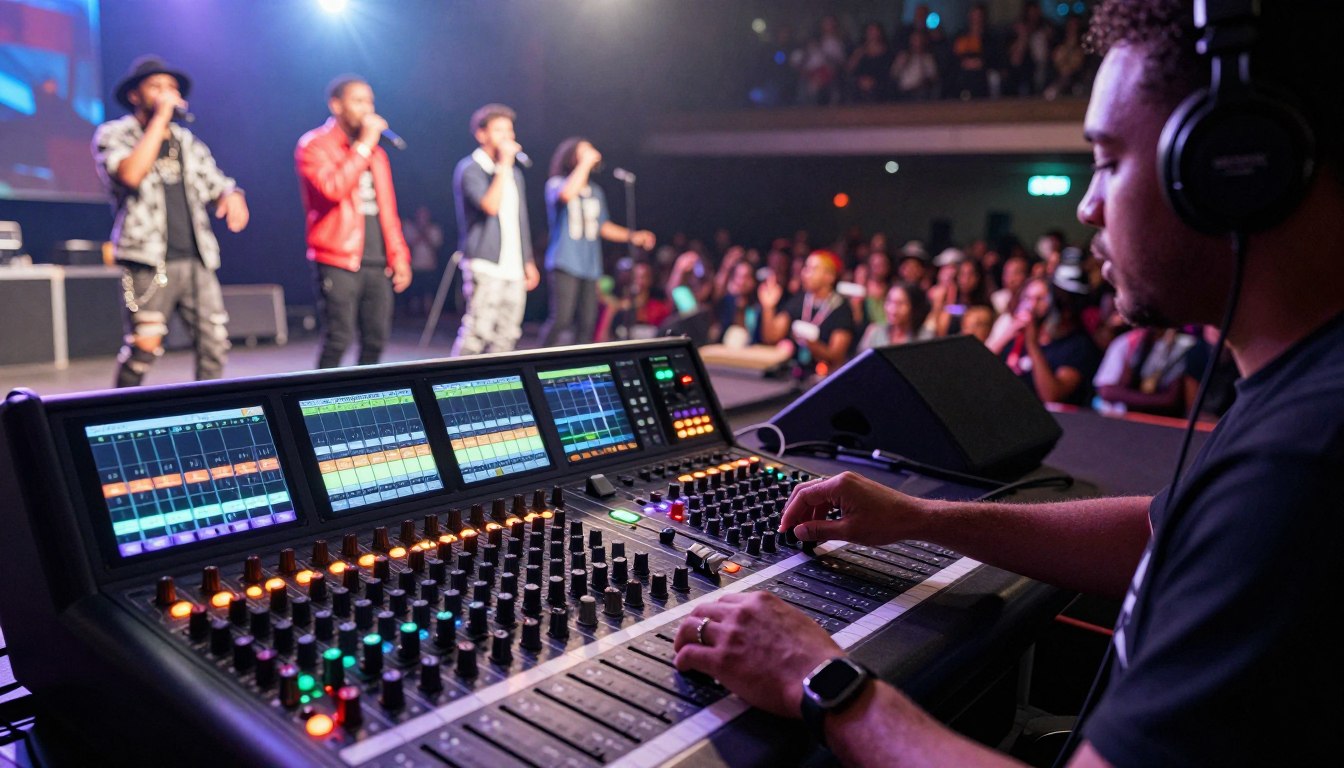
Mixing vocals live is key to a great show. It sets the mood and can change the audience’s experience. At Ghetto Superstars, we focus on top-notch sound that connects with the crowd.
We think great sound brings people together through music. Our goal is to offer DJ services that make events unforgettable and help charities. In this article, we’ll look at live sound mixing and how to improve your live shows.
Key Takeaways
- Understand the basics of vocal mixing techniques
- Learn how to optimize your live sound setup
- Discover the importance of sound quality in live performances
- Explore how Ghetto Superstars supports charitable causes through music
- Get insights into creating memorable events with professional DJ services
Understanding Vocal Mixing Basics
Mixing vocals is key in live sound production. It can make or break a performance. Knowing the basics is essential for a great vocal mix.
Importance of Mixing Vocals
Mixing vocals is more than just making the singer sound good. It’s about connecting the performer with the audience. A well-mixed vocal can make a song more emotional and memorable.
In live shows, a good vocal mix can turn a good performance into a great one. Focus on clarity, balance, and presence. Clarity makes vocals easy to understand, balance ensures they blend with the music, and presence makes them stand out.
Key Elements of Vocal Mixing
Vocal mixing involves EQ, compression, reverb, and delay. EQ fixes tonal issues, compression keeps the level steady, and reverb and delay add depth. These elements make the vocal sound natural and engaging.
- EQ: Adjusting the tone to correct imbalances and enhance clarity.
- Compression: Controlling the dynamic range to maintain a consistent level.
- Reverb and Delay: Adding depth and space to the vocal.
Live vs. Studio Mixing Techniques
While mixing vocals is the same in live and studio settings, the techniques differ. In studios, you have time to perfect every detail. In live settings, quick adjustments are needed based on the performance and venue.
Live mixing is about adapting to the situation. Consider the venue’s acoustics, the artists’ performance, and the audience’s response. It’s about making fast adjustments to ensure the best sound.
Essential Equipment for Live Vocal Mixing
Great live vocal mixing starts with the right equipment. The quality of your gear can make or break a performance. We’ll look at the key equipment needed for top-notch live vocal mixing.
Microphones Best Suited for Live Vocals
Choosing the right microphone is key for quality vocals. Dynamic microphones like the Shure SM58 are great for live shows. They’re tough and handle loud sounds well. Condenser microphones offer a more detailed sound, perfect for controlled environments.
Key Considerations for Live Vocal Microphones:
- Durability and build quality
- Cardioid pickup pattern to reduce feedback
- Frequency response tailored for vocals
Mixing Consoles and Their Features
The mixing console is the heart of your live sound setup. It lets you balance and enhance your vocal mix. Modern consoles have features like EQ adjustments, compression, and effects processing. Look for consoles with good preamps, enough channels, and effects options.
| Feature | Importance | Benefit |
|---|---|---|
| High-quality preamps | High | Clearer, more detailed sound |
| Comprehensive EQ | High | Ability to adjust tone to suit vocals |
| Effects Processing | Medium | Enhances vocal sound with reverb, delay, etc. |
Effects Processors for Vocal Enhancement
Effects processors are vital for improving your vocal mix. Reverb and delay add depth and dimension. Choose processors with many high-quality effects and are easy to use live.
Popular Effects for Live Vocals:
- Reverb: Adds ambiance to the vocal sound
- Delay: Creates echoes that can enhance the vocal presence
- Compression: Controls the dynamic range of the vocals
By focusing on the right equipment and using it well, you can greatly improve your live vocal mixing. Whether you’re mixing live or working with performers, the right gear is essential for a great show.
Techniques for Clarity in Live Vocal Mixing
To make a live show exciting, clear vocals are key. We know that clear vocals need the right techniques and gear. Here, we’ll look at ways to improve vocal clarity during live shows.
EQ Techniques for Vocals
Equalization (EQ) is a powerful tool in live sound mixing. It helps your vocals shine through the mix. Boosting the frequency range between 1 kHz to 4 kHz adds clarity and presence. Reducing frequencies around 250 Hz can also help avoid muddiness.
For example, a gentle boost around 5 kHz to 8 kHz can make vocals brighter and clearer. But, be careful not to overdo it, as too much high-frequency boost can make vocals harsh. Check out expert vocal tips for more on EQ settings.
| Frequency Range | Effect on Vocals | Adjustment Tip |
|---|---|---|
| 1 kHz – 4 kHz | Adds clarity and presence | Boost for clearer vocals |
| 250 Hz | Reduces muddiness | Cut to minimize muddiness |
| 5 kHz – 8 kHz | Enhances brightness and articulation | Gentle boost for brightness |
Compression Settings for Live Performance
Compression is vital in live vocal mixing. It keeps vocals consistent and clear throughout the show. Setting the compression ratio between 3:1 to 6:1 is a good starting point.
Adjust the threshold so the compressor kicks in when the vocalist sings loudly. A moderate attack time preserves the vocal’s natural dynamics. For more on compression, check out live vocal mixing resources.

Utilizing Reverb and Delay Effectively
Reverb and delay add depth to your live vocal mix. But, too much can muddy the sound. A subtle mix of reverb and delay creates space without overwhelming the vocals.
A short delay with a decay time of 200-300 ms adds width to vocals. Use reverb sparingly to avoid making vocals sound distant. Experiment during sound checks to find the right balance.
The Role of Sound Check in Vocal Mixing
The art of mixing vocals in concert starts with the sound check. It’s not just a routine; it’s the base of a great live show. In live audio engineering, sound checks are key to clear and precise sound.
Preparing for the Sound Check
Getting ready for sound checks is essential. You must check all equipment and know the venue’s acoustics. Doing a dry run with performers helps spot problems early. This teamwork improves the sound and builds a strong team spirit.
Key Elements to Adjust During Sound Check
During sound check, we adjust several important things. These include:
- EQ settings to match the venue’s acoustics
- Compression levels to control the vocals’ dynamic range
- Reverb and delay effects to boost the sound
These adjustments make the vocals clear, rich, and balanced. This creates a great experience for the audience.
Importance of Feedback from Performers
Feedback from performers is very important during sound check. They need the sound system to perform well. Working with them helps us make the right adjustments. This boosts their confidence and creates a positive atmosphere.
In summary, a good sound check is vital for live vocal mixing. It needs preparation, detail, and flexibility based on feedback. By focusing on sound checks, we can give amazing live shows that connect with the audience.
Mixing Vocals with Instrumentation
Mixing vocals with instruments is an art that makes music better. As a live sound engineer, you’re not just adjusting levels. You’re creating a sound world that grabs the audience’s attention. It’s about finding the right balance between vocals and instruments.
Balancing Vocals with Other Instruments
It’s tricky to balance vocals with instruments. You need to make sure vocals are clear and stand out. But they shouldn’t overpower the instruments or get lost. EQ can help carve out space for vocals in the sound.
Using Panning to Create Space
Panning is a key tool in live mixing. It lets you add depth and space to your mix. By placing instruments in different parts of the stereo field, you make room for vocals. This is great for big venues where sound travels far.
Managing Stage Volume Levels
Controlling stage volume is key for a balanced mix. It prevents feedback and keeps the sound clear. Working with performers to set monitor levels is important. This ensures everyone sounds good together.
Managing stage volume also means adjusting levels based on the performance’s energy. You might tweak levels during the show to keep the sound engaging. This way, you create a lively and dynamic experience for the audience.
Troubleshooting Common Live Vocal Mixing Issues
Effective live vocal mixing is more than just knowing the tech. It’s about solving problems quickly. Issues like feedback, mic problems, and tricky acoustics can pop up during a show. You need to be ready for them.
Dealing with Feedback Problems
Feedback is a big problem in live mixing. It happens when sound from speakers gets picked up by the mic and amplified again. To fix it, adjust your EQ settings to cut out the trouble frequencies, usually in the mid-range.
Also, position the microphone correctly. Make sure it’s not aimed at the speakers. Using feedback suppression tools can also help by automatically removing feedback frequencies.
Handling Mic and Monitor Issues
Mic and monitor problems can be as bad as feedback. If your mic isn’t working, check the connection to make sure it’s tight. Sometimes, just replacing the cable fixes it.
For monitor problems, check the monitor’s position and volume. Make sure it’s aimed at the performer and not causing feedback. Adjusting the monitor’s EQ can also help get a clearer sound.
Adjusting to Audience Acoustics
The acoustics of the venue can really change how your mix sounds. Different places have different sound reflections and absorption. Be ready to adjust your EQ and compression settings for the venue.
Using acoustic analysis tools can help you understand the venue’s sound better. Some mixing consoles have these tools, or you can use software. By making smart adjustments, you can make your mix sound great for the audience, no matter the venue.
Enhancing Vocal Performances
Vocal performances are the heart of any live show. They can make or break the experience. To create an unforgettable show, focus on techniques that enhance your vocals.
Live Vocal Effects to Consider
There are many live vocal effects to explore. Reverb, delay, and distortion can add depth and character. For example, reverb can make your vocals sound bigger and more engaging.
Try different effects to find the perfect sound for your show. You can also use layering to make your sound fuller.
Layering Vocals for a Fuller Sound
Layering vocals can make your sound richer and more complex. Doubling or tripling your vocal tracks can captivate your audience.
To layer vocals well, focus on levels, panning, and effects. Here’s a simple guide:
| Layer | Level | Panning |
|---|---|---|
| Main Vocal | -20 dB | Center |
| Double | -25 dB | Hard Left/Right |
| Triple | -30 dB | Hard Left/Right |
Timing and Timing Effects in Mixing
Timing is key in live music mixing. Effects like delay and echo can enhance your vocals.
Sync your effects with your song’s tempo for a cohesive sound. Experiment with timing to find what works best for your show.
Utilizing Technology for Vocal Mixing
Technology has changed how we mix vocals in concerts. Digital mixing consoles and AI tools have made it better. These tools are changing live sound production.
Digital Mixing Consoles and Software
Digital mixing consoles have changed live sound production. They offer flexibility and precision. Engineers can save and recall settings easily.
This makes adapting to different venues and performances easier. You can fine-tune your mix and recall it for the next show. This saves time and keeps the sound consistent.
Some key features of digital mixing consoles include:
- Scene recall capabilities
- Advanced effects processing
- High-resolution audio quality
- User-friendly interfaces
Software solutions also play a big role in vocal mixing. Programs like Harman’s HiQnet offer tools for live sound management. They include system optimization and performance monitoring.
AI Tools for Live Mixing Enhancements
AI technology is being used to improve live mixing. These tools analyze audio in real-time and make adjustments. For example, AI can manage feedback by identifying and suppressing problematic frequencies.
Some benefits of using AI in live mixing include:
- Improved sound quality through real-time analysis
- Automated feedback suppression
- Enhanced vocal clarity
Remote Mixing Capabilities
Remote mixing has given sound engineers more flexibility. They can control mixes from anywhere. This is useful for large festivals or events where the engineer may not be on-site.
Remote mixing also makes collaboration easier. An engineer can work with a performer remotely. They can fine-tune the mix without being in the same place.
As we keep using these technologies, the future of live sound production looks bright. Digital mixing consoles, AI tools, and remote mixing capabilities are making experiences better for audiences everywhere.
The Importance of Collaboration in Vocal Mixing
In the world of live music mixing, collaboration is not just beneficial, it’s essential. A great live mix needs more than technical skills. It needs teamwork among sound engineers, vocalists, and musicians. When everyone works together, the sound is more cohesive and enjoyable.
Working with Vocalists and Musicians
Collaboration starts with knowing what the vocalists and musicians want. Effective communication is key to capturing their vision. This means talking about their expectations and understanding their style.
By working closely with performers, you can improve their sound. This might mean adjusting EQ settings or using compression to make their voice stand out.
Communicating with Other Sound Professionals
Collaboration also means working well with other sound professionals. This includes stage managers, front-of-house engineers, and monitor engineers. Everyone needs to work together for a smooth live sound experience.
Clear communication is important to avoid misunderstandings. It ensures everyone is on the same page. Whether it’s about signal flow or troubleshooting, effective collaboration is key to success.
Learning from Each Performance
Every live performance is a chance to learn and improve. Working with performers and other sound professionals offers valuable insights. This feedback loop is essential for getting better at live sound mixing.
Reflecting on the experience is important. Whether through discussions or reviewing recordings, it helps you see what to improve. This continuous learning is vital for staying adaptable and delivering top-notch live mixes.
Best Practices for Each Performance
To give a great live sound experience, you need a solid mixing plan. This plan is the base for front of house mixing. It makes sure every show sounds amazing.
Setting Up a Mixing Plan
A mixing plan means knowing the venue, performers, and audience. It covers microphone selection, EQ settings, and effects usage. With a plan, you can adjust to each show’s needs quickly.
First, check the venue’s sound and the event type. This helps you mix the vocals live better. Think about the instruments and the singers’ likes for a balanced sound.
Documenting Settings for Reuse
Writing down your mixing settings is key for future shows. It lets you improve based on past experiences. Note what worked and what didn’t to get better at live sound production.
Make a template for your mixing settings. Include EQ, compression, and effects details. This template helps you start mixes faster and keeps them consistent.
Adapting to Different Venues and Events
Every place and event is different, needing a flexible mixing style. Be ready to tweak settings for the venue, audience size, and performer needs. Being flexible is essential for a great mixing vocals live experience.
Listen to the show and adjust as needed. Talk with the performers and sound team to stay in sync. Working together helps handle the unique challenges of different venues and events.
Exploring Ghetto Superstars’ Services
As we wrap up our discussion on live sound mixing and vocal techniques, we invite you to explore the world of Ghetto Superstars. This community-driven entity brings people together through music and events. Their services are designed to elevate your live music experiences, whether you’re an artist or an event organizer.
Professional DJ Services and Event Hosting
Ghetto Superstars offers top-notch DJ services and event hosting. They can transform any gathering into an unforgettable celebration. With expertise in live music mixing and live vocal effects, they ensure every event is executed with precision and passion.
Their team is dedicated to creating memorable experiences. These experiences resonate with your audience.
Empowering Creatives with Free AI Music Tools
In addition to their event services, Ghetto Superstars provides access to free AI music tools. These tools can enhance your live sound mixing capabilities. They also inspire new artistic expressions.
By leveraging these resources, you can take your music to the next level. You can contribute to the vibrant community that Ghetto Superstars is building.
We encourage you to visit Ghetto Superstars’ platform. Discover how their services can amplify your music and event experiences. Join the movement and let’s unite through the power of music.