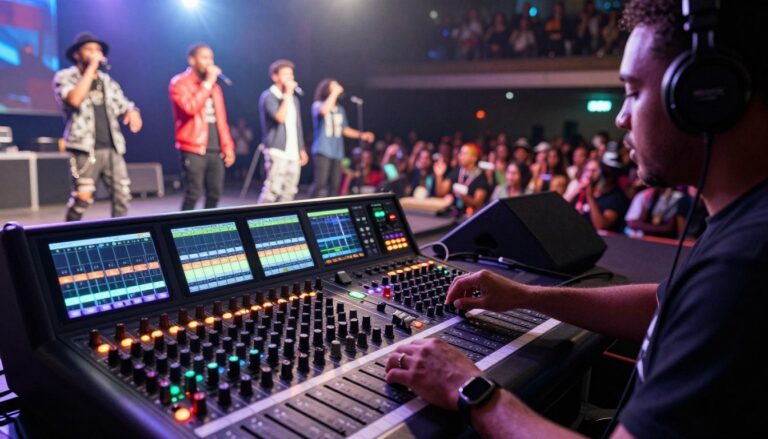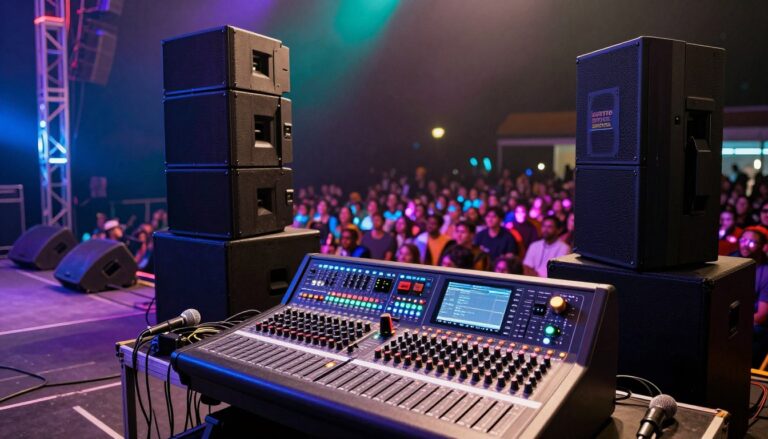
Feedback can ruin a live sound system, turning a great show into chaos. At Ghetto Superstars, we focus on delivering top-notch sound experiences. We want your events to be full of energy and keep the crowd excited.
When amplified sound from a speaker goes back into the system through an open mic, it gets amplified again. This creates the unwanted feedback.
We know how annoying feedback can be. That’s why we’re here to help you troubleshoot and fix it. In this article, we’ll cover why feedback happens and how to stop it. We’ll make sure your events are unforgettable for all the good reasons.
Key Takeaways
- Understand the causes of feedback in live sound systems.
- Learn techniques to prevent feedback during performances.
- Discover how proper microphone placement can make a difference.
- Explore the importance of gain structure and equalization.
- Find out how Ghetto Superstars’ services and tools can enhance your events.
Understanding Feedback in Live Sound Systems
Feedback is a big problem in live sound systems. It can make events uncomfortable and ruin the quality. It’s important to manage feedback well.
What is Audio Feedback?
Audio feedback happens when sound from a speaker gets picked up by a mic. Then, it gets amplified again and again. This creates a loud, harsh sound that’s bad for listeners. Feedback management is key to stop this.
Why Does Feedback Occur?
Feedback comes from many things like mic and speaker placement, gain settings, and room acoustics. When sound from speakers gets back to the mic and gets amplified, it starts a loop. Knowing these factors helps in fixing feedback issues.
“The key to preventing feedback is understanding the acoustics of the room and adjusting your equipment.”
Common Sources of Feedback
Some common feedback causes are:
- Improper microphone placement
- Inadequate gain structure
- Poorly positioned speakers
- Room acoustics that are not well-managed
By fixing these issues, you can lower the chance of feedback at your event.
| Feedback Source | Prevention Technique |
|---|---|
| Microphone Placement | Position microphones away from speakers |
| Gain Structure | Adjust gain levels to optimal settings |
| Speaker Positioning | Place speakers to minimize sound reflection |
Check out our Free AI Music Tools. They help with DJ names, event ideas, setlists, and more. These tools are great for planning a successful event with less feedback.
Recognizing the Signs of Feedback
It’s important to spot feedback signs early to fix the problem fast. Feedback can show up in different ways. Knowing these signs helps a lot.
Distorted Sound Quality
Feedback often makes sound quality bad. If your sound is no longer clear, it might be feedback. This can happen if the mic is not placed right or if EQ settings are off.

Frequency Peaks and Dips
Feedback also shows up as uneven sound levels. When some sounds get too loud or too quiet, it can cause feedback. To fix this, try adjusting EQ settings or using a feedback suppressor. You can find more tips on feedback troubleshooting strategies.
Unwanted Noise Levels
Too much noise is another feedback sign. If the noise gets louder, it’s a feedback clue. To lower noise, try soundproofing or acoustic treatment.
Spotting these feedback signs early helps avoid damage to your sound system. Our company offers DJ services, sound & PA systems, lighting, and event hosting in Uganda. We’re here to help with your live event or sound system setup.
| Signs of Feedback | Description | Solution |
|---|---|---|
| Distorted Sound Quality | Sound is no longer clear and crisp | Adjust microphone placement or EQ settings |
| Frequency Peaks and Dips | Imbalance in sound frequencies | Use feedback suppressor or adjust EQ settings |
| Unwanted Noise Levels | Increased noise level | Use noise-reducing techniques such as soundproofing |
Techniques to Prevent Feedback
Stopping feedback is key for a smooth live sound experience. It can mess up the sound quality and upset the audience. So, it’s important to use methods that help avoid it.
Microphone Placement Strategies
Where you place microphones is very important to stop feedback. Microphones should catch sound directly and not from speakers. Place them near the sound source and far from speakers. Also, using stands and adjusting angles can help.
Key microphone placement tips:
- Position the microphone close to the sound source.
- Direct the microphone towards the sound source and away from the speakers.
- Use microphone stands to adjust the height and angle.
Equalization Tips for Sound Engineers
Equalization (EQ) is a great tool against feedback. Sound engineers can tweak EQ settings to cut out feedback-causing frequencies. Use graphic or parametric equalizers to do this. Also, boost frequencies that make the sound clearer.
Effective EQ techniques include:
- Identifying and cutting problematic frequencies.
- Boosting frequencies that enhance sound clarity.
- Using EQ to balance the sound mix.
Using Directional Microphones
Directional microphones are made to pick up sound from one direction. This makes them less likely to catch sound from speakers. They come in patterns like cardioid and supercardioid, each with its own directionality.
Benefits of directional microphones:
- Reduced pickup of unwanted sound.
- Improved sound quality.
- Enhanced feedback rejection.
Using these methods can greatly improve your live sound system. It can also cut down feedback. Whether you’re a sound engineer or an event planner, knowing these techniques will help you provide better sound experiences.
For more resources and professional DJ services, check out streaming and downloading the latest DJ mixes and video mixtapes from trusted sources.
Adjusting Your Gear
Getting the right sound in live events is all about adjusting your gear. It’s not just about turning knobs. It’s about making sure every part works together smoothly. A few key tweaks can greatly reduce feedback and improve sound quality.
Setting Up Your PA System Correctly
Setting up your PA system right is key to avoiding feedback. You need to make sure your mixers, amplifiers, and speakers are all working together. First, calibrate your mixer to the right gain levels. Then, adjust your amplifier settings to fit your speakers’ needs.
“A well-configured PA system is the backbone of any successful live event,” says a seasoned sound engineer. “It’s not just about having the right equipment, but also about knowing how to use it effectively.”
How to Position Speakers Effectively
Where you place your speakers is very important. Make sure they’re not facing the microphones to avoid feedback. Instead, angle them towards the audience for better sound distribution.
- Position main speakers on either side of the stage, angled inward.
- Use monitor speakers to provide clear audio to performers on stage.
- Avoid placing speakers near reflective surfaces that can cause echo.
Utilizing Feedback Suppressors
Feedback suppressors help automatically find and fix feedback problems. These devices are a big help in live sound situations, where feedback can pop up unexpectedly. Adding a feedback suppressor to your PA system helps manage feedback risks.
Check out our DJ and audio gear in our shop. Or learn more about our community impact through the Ghetto Foundation. Supporting our mission helps unite people through music while supporting good causes.
Troubleshooting Existing Feedback Issues
Fixing feedback problems needs both tech know-how and quick analysis. It’s key to have a clear plan to find and fix issues fast.
Step-by-Step Feedback Identification
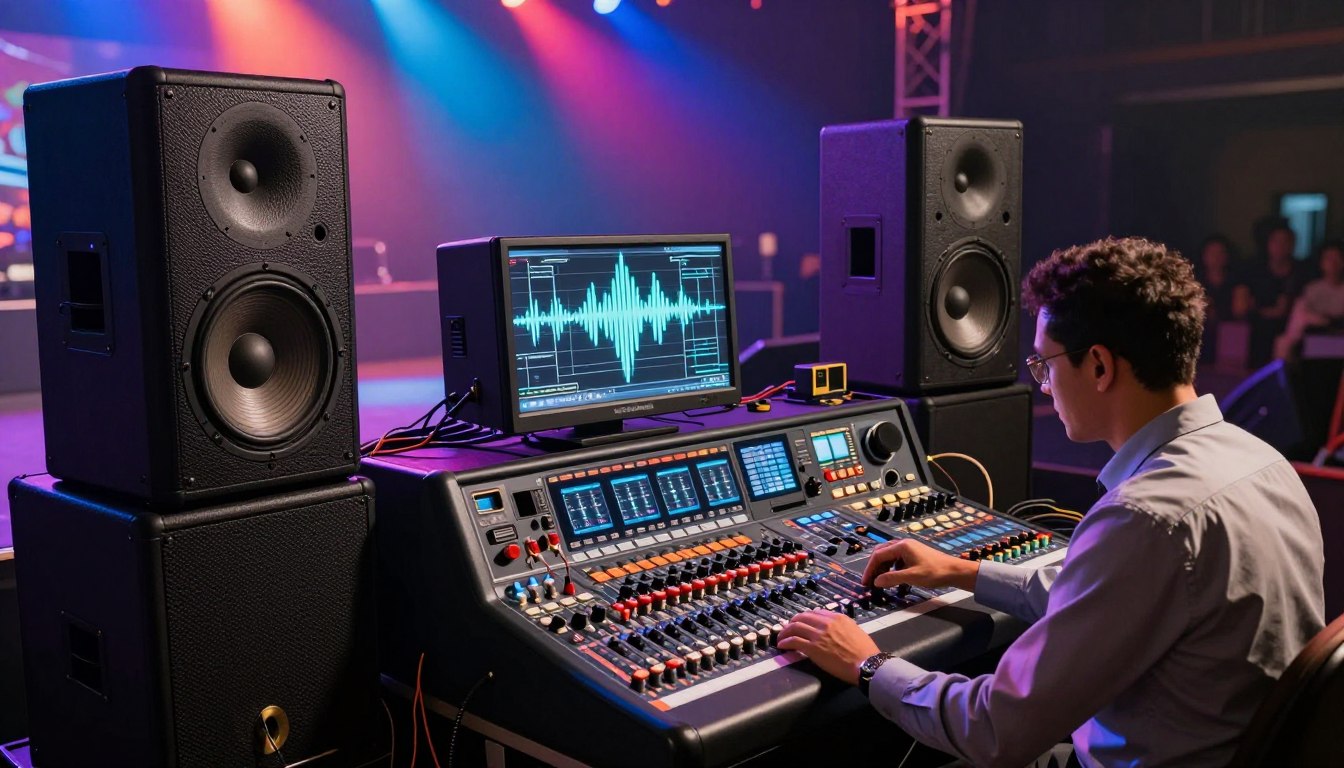
To solve feedback problems, follow a clear process. First, find the source of the feedback by checking your sound system parts. Use a feedback analysis tool or sound meter app to spot the trouble frequency.
Then, tweak the EQ settings to cut down the gain at the bad frequency. This method, called notching, can get rid of feedback without hurting the sound too much.
Testing Your Equipment Before Events
Testing your gear before an event is a must. It checks if everything works right and spots feedback problems early. Do detailed sound checks and adjust settings as needed.
Having a backup plan is smart too. This includes extra gear and knowing how to quickly solve any event problems.
Adapting to Room Acoustics
Every venue has its own sound issues. Knowing and adjusting to these is critical for managing feedback. For example, rooms with hard surfaces might need more sound absorption to cut down echo.
Being aware of the room’s sound and making the right changes can lower feedback risk. This ensures your audience gets the best sound. If unsure, get help from a pro sound engineer or experts for advice.
Need help with your sound needs? Contact us at +256 741 669 338 or email services@ghettosuperstars.co. We’re ready to help you get the best sound for your events.
Collaborating with Audio Professionals
Working with sound engineers can give you great tips on feedback troubleshooting techniques. They help make sure your sound is top-notch and avoid feedback at live events.
“Music connects us — and everything you need starts here.” This saying is true when you work with experts in live sound. It’s not just fixing problems; it’s about making the audio experience amazing.
When to Call a Sound Engineer
Knowing when to get a sound engineer is key to a successful event. If you’re not sure about the venue’s acoustics or your PA system, it’s time to ask for help. Sound engineers can check things out and give you specific ways to avoid feedback.
Benefits of Professional Consultation
Getting professional advice has many advantages, including:
- Expert analysis of your sound system’s setup and performance
- Personalized recommendations for microphone placement and equalization
- Training on how to use feedback suppressors effectively
Training for Event Planners
Event planners can really benefit from learning about sound management and feedback prevention. Knowing the basics of sound systems and how to work with sound engineers lets you make better decisions. This knowledge helps you:
- Spot feedback issues early
- Talk well with your sound team
- Keep your event running smoothly
By getting trained, you can make your events better and give your guests a great time.
In short, working with audio professionals is key to a successful live event. Knowing when to call a sound engineer, getting professional advice, and training event planners can make your events unforgettable.
The Role of Acoustic Treatment
Acoustic treatment plays a big role in improving feedback. It helps create a better sound environment, reducing feedback during live shows. This makes the sound quality better and the audience’s experience more enjoyable.
Importance of Acoustic Panels
Acoustic panels are key in managing sound reflections. By placing them right, sound engineers can minimize echo and reverberation. This is very important in places with hard surfaces that bounce sound.
Absorption vs. Diffusion
Knowing the difference between absorption and diffusion is important. Absorption uses materials to soak up sound, cutting down on echoes. Diffusion scatters sound, making it more even. Using both can greatly enhance sound quality.
“The right acoustic treatment can make a significant difference in the overall sound quality of a venue, enriching the listener’s experience.”
Soundproofing Techniques
Soundproofing is also vital in acoustic treatment. It involves sealing gaps and using soundproofing materials to keep sound in. Good soundproofing keeps the sound inside, improving quality and reducing feedback.
By using these acoustic treatment methods, event organizers and sound engineers can greatly improve feedback. This makes the audience’s experience more enjoyable and immersive. As we bring people together through music and support charities, acoustic treatment is more important than ever.
Best Practices for Live Events
Creating a memorable live event starts with careful planning, focusing on sound. At Ghetto Superstars, we know that sound quality is key to a great celebration.
Planning with Sound in Mind
Start planning your event by thinking about sound early. Know the venue’s acoustics, pick the right equipment, and make sure your sound engineers are pros. Good sound planning can turn a good event into a great one.
- Check the venue’s sound to plan the best setup.
- Pick equipment that fits your event size and type.
- Choose sound engineers who can fix any problems.
Ensuring Clear Communication with DJs
Talking clearly with your DJs is key for a smooth event. Make sure they know the event schedule, playlist needs, and any guest requests. Working together is essential for a great performance.
To talk clearly, consider these steps:
- Have a meeting with your DJs before the event to go over details.
- Give them a detailed schedule and playlist needs.
- Keep a clear communication line open during the event to solve any problems fast.
Continuous Monitoring During Events
Keeping an eye on sound quality during the event is critical. Our team at Ghetto Superstars is all about top-notch DJ services for unforgettable celebrations.
- Check sound levels and quality often during the event.
- Be ready to fix any sound problems that come up.
- Have a backup plan for equipment failure or technical issues.
By following these tips, you can ensure great sound and avoid feedback. This will make your event unforgettable for your guests.
Resources for DJs and Event Planners
We’ve talked about fixing feedback in live sound systems. Now, we want to share some great resources for you. At Ghetto Superstars, we aim to bring people together through music. We also support good causes.
AI Music Tools for Enhanced Events
Check out our FREE AI Music Tools for your events. They help you tackle feedback issues and ensure great sound. Our tools make event planning easier, focusing on quality sound.
Accessing Exclusive Mixes and Video Mixtapes
See our mixes and video mixtapes for event inspiration. Our content is made to create a lively atmosphere. With our sound services, your event will run smoothly. We help with feedback and finding the right mix.
Booking Professional Sound Services
Book our professional sound services for your event. Our team ensures excellent sound quality. We’re experts in fixing feedback, making your event a hit. Let’s make unforgettable music experiences together.