Live sound is the heart of any great event, from concerts to corporate meetings. At Ghetto Superstars, we love making unforgettable experiences with our DJ services and event planning.
For beginners, knowing the basics of live sound is key. It’s about boosting and changing sound live to engage your audience. Our team is here to help with our sound engineering and event production skills.
Learning the basics of live sound can make your events better. We’re excited to help make your next event one to remember!
Key Takeaways
- Understanding live sound is key for memorable events.
- Ghetto Superstars offers top DJ services and event planning.
- Sound engineering is vital in live sound production.
- Knowing live sound basics can improve your events.
- We’re committed to creating unforgettable experiences for you.
The Definition of Live Sound
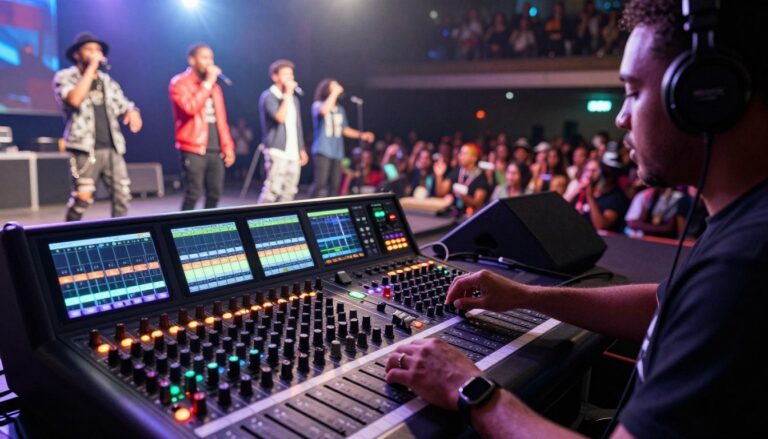
Live sound is about changing and boosting sound in real time. It makes events like concerts more exciting for everyone. This process is key for great audio at live shows.
Key Components of Live Sound
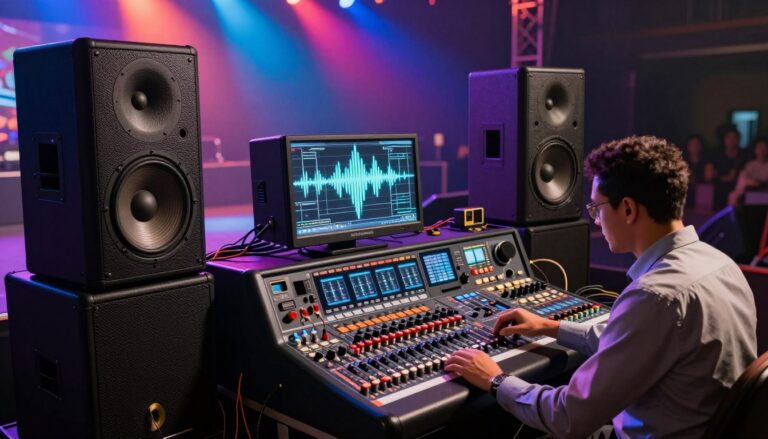
Live sound needs mixing consoles, speakers, and microphones. Mixing consoles help balance the sound. Speakers and PA systems spread the sound around the venue.
| Component | Function |
|---|---|
| Mixing Consoles | Balance sound levels and adjust audio settings |
| Speakers and PA Systems | Distribute sound across the venue |
| Microphones | Capture sound from performers |
Importance in Events
Live sound makes events feel more real. It pulls the audience in and makes the show better. Whether it’s a concert or a wedding, good sound matters a lot.
Live Sound vs. Studio Sound
Live sound and studio sound are different but both important. Live sound is for events, while studio sound is for recording. Knowing the difference is key for music pros.
We bring people together through music and help charities. The quality of live sound is key to our mission. Great sound makes events unforgettable for our audience.
Equipment Used for Live Sound
Knowing about live sound equipment is key for a great audio experience at events. The gear ranges from mixing consoles and speakers to microphones and cables. Each piece is vital for capturing, boosting, and shaping sound.

Mixing Consoles
Mixing consoles are the core of live sound systems. They let sound engineers adjust audio live. Consoles vary from simple to complex, with advanced features.
Key features of mixing consoles include:
- Multiple input channels for connecting various sound sources
- Equalization (EQ) controls for adjusting tone
- Effects processing, such as reverb and delay
- Monitoring controls for headphones and main speakers
Speakers and PA Systems
Speakers and PA systems amplify and spread sound to the audience. The speaker type depends on the venue and event type.
Some common types of speakers include:
- Main speakers for front-of-house sound
- Monitor speakers for stage monitoring
- Subwoofers for enhanced bass response
Microphones
Microphones are key for capturing performer sound. There are many types, each for different uses.
Popular microphone types include:
- Dynamic microphones for vocals and loud instruments
- Condenser microphones for capturing detailed sound
- Lavalier microphones for hands-free operation
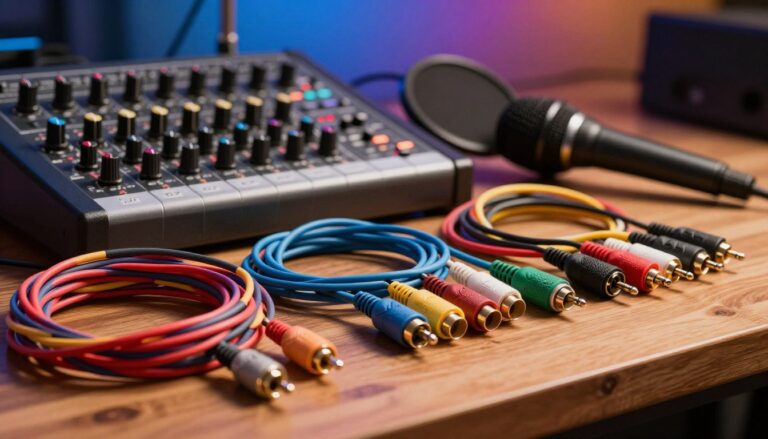
Cables and Accessories
Cables and accessories are vital but often overlooked. Good cables reduce noise and improve sound quality.
“A good cable can make a huge difference in the overall sound quality. It’s worth investing in reliable, high-quality cables for your live sound setup.”
Some essential cables and accessories include:
- XLR cables for microphone connections
- TRS cables for line-level connections
- Cable ties and organizers for managing cables
Understanding live sound equipment helps create a top-notch audio experience. Whether it’s a concert, corporate event, or wedding, the right gear is essential.
The Role of a Live Sound Engineer
A live sound engineer’s skills are key to creating an amazing audio experience at live events. They need technical know-how and artistic flair to make sure the sound is top-notch.
Responsibilities and Skills
A live sound engineer sets up and runs the sound system. This includes mixing consoles, speakers, and microphones. They must know a lot about sound and be quick to fix problems during events. Important skills are technical knowledge, problem-solving, and communication to work well with artists and crew.
Working with Artists
Working with artists is a big part of a live sound engineer’s job. They team up with performers to get their sound right. This means doing soundchecks and tweaking settings to meet the artist’s sound vision.
Troubleshooting During Events
Even with careful planning, technical problems can pop up during events. A good live sound engineer can spot and fix these issues fast. They need to stay calm and know their sound equipment well.
At our company, we know how vital professional live sound engineering is for events. That’s why we provide DJ services, sound & PA systems, lighting, and event hosting all over Uganda. We make sure your event is unforgettable with our top-notch sound and technical skills. Whether it’s a concert, corporate event, or wedding, our team is here to make it special.
Setting Up a Live Sound System
To get great sound, setting up a live sound system needs care and detail. It involves several key steps. These steps make sure the sound is clear, balanced, and fun for everyone listening.
Venue Considerations
First, we need to know the venue well. Every venue has its own sound challenges. For example, a place with lots of echo needs sound system tweaks to avoid echo and distortion.
We look at the venue’s size, the audience type, and the stage and seating layout. It’s also key to check the venue’s sound gear and setup.
Planning the Setup
With a good understanding of the venue, we start planning. We pick the right mixing consoles, speakers, microphones, and cables for the event. The choice depends on the event’s needs, like the number of performers and the music type.
We also plan where to put the sound system’s parts. This ensures the best sound reach and avoids feedback. For complex setups, we might use software to test the sound system before the event.
Soundcheck Procedures
A detailed soundcheck is vital to ensure everything works right. We test each sound system part, looking for any problems. This includes checking microphones, instruments, and playback systems.
We also adjust the sound during the soundcheck to get it just right. This might involve using EQ to balance the sound and fix any issues.
By carefully planning and soundchecking, we guarantee a top-notch live sound experience. This is true for concerts, corporate events, or weddings. A well-set-up sound system makes the event unforgettable.
At Ghetto Superstars, we believe music can bring people together and make a difference. That’s why we offer professional DJ services and support through the Ghetto Foundation. Check out our shop for DJ and audio gear, and join our community to see how we’re making a positive impact.
Enhancing the Audience Experience
We aim to bring people together through music. Making the audience experience better is key. Live sound techniques are vital in creating an immersive experience that connects with everyone.
To improve this, we focus on a few important areas. First, achieving balanced sound is essential. This means the audio levels are just right, clear, and without distortion.
Achieving Balanced Sound
Balanced sound is the heart of a great live event. It needs a deep understanding of the acoustics of the venue. Here are some strategies for balanced sound:
- Do thorough soundchecks to find and fix any problems.
- Use top-notch sound equipment that can handle the event’s demands.
- Place speakers and microphones in the best spots for sound distribution.
- Keep an eye on audio levels in real-time and adjust as needed.
Importance of Acoustics
The acoustics of a venue greatly affect sound quality. Knowing the venue’s acoustic properties is key for a great sound experience. This includes things like reverberation time and sound reflections.
Understanding the venue’s acoustics helps us set up and adjust the sound system. This ensures the audience gets a balanced sound experience.
Audience Engagement Techniques
Engaging the audience goes beyond just sound quality. It’s about creating an immersive experience. We use various audience engagement techniques, like:
- Lighting and visual effects that match the music.
- Interactive elements to get the audience involved.
- A dynamic atmosphere that matches the audience’s energy.
By mixing these techniques with live sound techniques, we create unforgettable experiences. These experiences leave a lasting impact on the audience.
Types of Live Events with Sound Needs
Live events come in many forms, each needing its own sound setup. Whether it’s a concert, corporate event, or wedding, sound quality is key. It can make or break the experience.
Concerts and Festivals
Concerts and festivals need top-notch sound systems. They range from small gatherings to huge festivals with thousands there. The sound must be clear and strong, reaching every corner.
Key Considerations for Concerts and Festivals:
- Sound coverage for large crowds
- High-quality sound equipment for clarity
- Acoustic considerations to avoid echo and feedback
Corporate Events
Corporate events, like product launches and conferences, also need professional sound. The sound needs vary by venue size and presentation type. Clear sound is key for effective communication.
Key Considerations for Corporate Events:
- Clear speech intelligibility
- Background music or sound effects as needed
- Reliable equipment to avoid technical issues
| Event Type | Sound Requirements | Key Considerations |
|---|---|---|
| Concerts/Festivals | High-quality, powerful sound | Sound coverage, clarity, acoustics |
| Corporate Events | Clear, crisp sound | Speech intelligibility, background music, reliability |
| Weddings/Private Parties | Versatile sound for various activities | Music selection, volume control, ambiance |
Weddings and Private Parties
Weddings and private parties also need professional sound services. These events have different activities, like speeches and dancing, each needing its own sound. A good sound system enhances the atmosphere and ensures everything is heard clearly.
“A good sound system is like a good DJ – it sets the tone for the entire event and keeps the party going all night long.”
At our company, we know how important quality sound is for live events. We offer professional DJ services that make your celebration unforgettable. We ensure your event sounds as great as it looks.
Trends in Live Sound Technology
Innovation is leading the way in live sound technology. New advancements in digital mixing, wireless tech, and visuals are changing the game. These changes offer sound engineers and event planners new ways to create amazing experiences.
Digital Mixing and DSP
Digital mixing consoles have changed the game for sound engineers. They offer unprecedented flexibility and precision. These consoles make setting up and running sound easier and faster.
Digital Signal Processing (DSP) is key for perfect sound. Experts say digital mixing and DSP have become essential. They bring clarity and control to live sound that was once unthinkable. For more on this, check out Mirtec Expo’s latest news on live sound trends.
Wireless Technology
Wireless tech has made live sound more mobile and flexible. Wireless mics and in-ear monitors let performers move freely. This tech also cuts down on cable clutter, making setup and teardown quicker.
Integration with Visuals
Combining live sound with visuals is key for a deeper experience. Advances in lighting and video tech allow for perfect sync with audio. This mix of audio and visuals is expanding what’s possible in live events.
The future of live sound tech is exciting. With streaming and downloading mixes and videos, creativity knows no bounds. Whether you’re in sound engineering, event planning, or just love music, keeping up with live sound trends is vital for unforgettable experiences.
Common Challenges in Live Sound Production
Live sound production faces many hurdles, from noise to technical failures. We tackle these issues with planning and skill. Our work, like the Ghetto Foundation, aims to bring people together through music.
Noise Issues
Noise problems are a big challenge. Unwanted sounds can mess up the audio, making it sound bad. Sound engineers use noise reduction software and smart microphone and speaker placement to fix this.
At outdoor events, wind noise is a big problem. Windshields on microphones help a lot. Also, electrical interference from other devices can be lessened with good cables and grounding.
Technical Failures
Technical problems are common too. Equipment can fail due to poor maintenance, overheating, or manufacturing defects. Regular checks and backup equipment are key to avoiding these issues.
At Ghetto Superstars, we focus on reliable gear and skilled techs. This way, we can quickly solve problems and make live events run smoothly.
Dealing with Diverse Venues
Every venue has its own challenges, from sound to logistics. For example, a big outdoor place needs a different setup than a small club. Knowing the venue’s sound and limits is essential for great sound.
We adapt to each venue’s needs with our expertise. This flexibility, along with our community focus, helps us create unforgettable live music experiences.
The Future of Live Sound
We’re on the edge of a new era in live sound, thanks to tech advancements and changing audience wants. The future will blend new tech, evolving audience needs, and creative vision from sound engineers and artists.
Innovations on the Horizon
The live sound world is seeing big changes. Artificial Intelligence (AI) is being used in sound mixing and processing. AI can tweak sound in real-time for a better audio experience.
Wireless technology is also getting better, making performances more mobile and flexible. This tech reduces clutter and boosts the experience for everyone involved.
Impact of AI and Technology
AI and tech are changing live sound in many ways. AI can predict and solve technical problems, automate tasks, and aid in sound design. For example, AI can suggest the best speaker placements based on a venue’s acoustics.
| Technology | Impact on Live Sound | Benefits |
|---|---|---|
| AI in Sound Mixing | Real-time sound analysis and adjustment | Optimized audio experience |
| Wireless Technology | Greater mobility and reduced clutter | Enhanced performance and audience experience |
| Digital Signal Processing | Improved sound quality and flexibility | Better sound customization |
Evolving Audience Expectations
Audiences now want more from live events. They want high-quality sound and visually stunning performances. The future will see more audio and visual integration for a complete experience.
With social media, people want to share their event experiences instantly. This means better live streaming and recording at events.
Looking ahead, the future of live sound will depend on our ability to innovate and meet these new expectations. We’ll use tech to create unforgettable moments for people everywhere.
Conclusion: The Heart of Live Music Experience
The live music experience is a vibrant mix of sound, emotion, and community. It’s the heartbeat of every memorable event. This includes concerts, festivals, corporate gatherings, and intimate celebrations.
Ghetto Superstars is all about delivering top-notch DJ services. We aim to make every event unforgettable. We combine professional sound with a passion for making a difference in our community.
Uniting Through Music
Ghetto Superstars is more than just a DJ service. We’re a force for unity and celebration. Our goal is to bring people together through music and support good causes.
If you love music, organize events, or believe in its power, reach out to us. Let’s create unforgettable moments together. For more information or to book our services, call +256 741 669 338 or email services@ghettosuperstars.co.